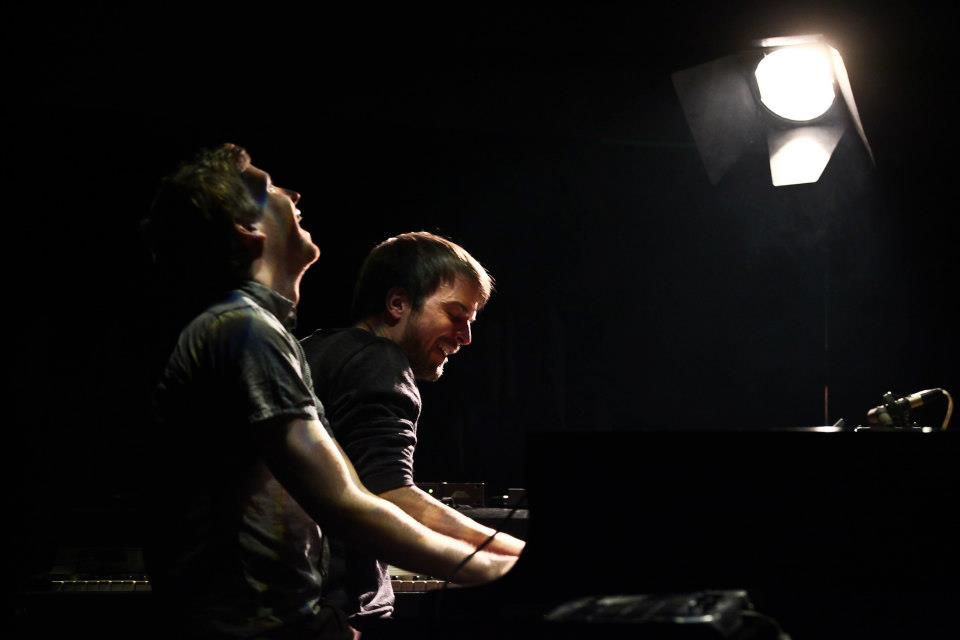
Thore Pfeiffer - Im Blickfeld


Thore Pfeiffer landed unexpectedly earlier this year with two tracks on Kompakt's 2015 edition of Pop Ambient. It's a compilation that has on many occasions, ended up being the first step into the ambient 'mainstream' for artists such as Leandro Fresco, Markus Guentner and even Donnacha Costello. Seeing Thore's name on this years edition mean't only one thing - Mr Wolfgang Voigt had found a new ambient prodigy to help spearhead the already infamous compilation series. 

Following 2015's Pop Ambient compilation, Kompakt announced that the series would be getting its very own artist album releases. Leandro Fresco kicked things off with a stunning sound that we've loved since his first appearance in 2003 and now it's the turn of Thore Pfeiffer.

Im Blickfeld spans 11-tracks of gentle loop-based melodies that softly roll, tease and lull you closer to Thore's delicate and intricate touch. There's an immediate resonance with most Pop Ambient material that seems to play on this type of approach - it's Kompakt's trademark sound after-all, yet Thore has induced a gentle swirl of folk simplicity compared to previous executions.

The opening track, Allzu Nah, is perhaps the finest example and differentiator from previous Pop Ambient sound. Like watching a black-and-white film of a country fairground, that stalls, stops, and injects new faces in an almost playful yet haunting manner. 

Was Ihr Wolt seems to book-end Thore's gentle approach at the start of the album, with a consistent alluring pulse, backed by subtle keys and a slowly emerging high-pitched detail. This track sets up the second section of the album which goes on to focus more on guitar and strings, with Nirgwendo providing the most energy out of the bunch, akin to a dimly lit moment from an 80's film-score, only to then twist into a more avant-garde approach on Kolibri - where plucked strings take center stage. 


The final third of the album then descends into much warmer territory with Ebene - the stand-out track for me, featuring dark, driving swathes of color, transitioning into Falke - a beautiful airy filtered track that immediately revives the more recognized Pop Ambient sound.

Finishing on the fifteen-minute long Gipfel, the looping strings play ode to the addictive simplicity we find throughout the album. Thore's embrace of the Pop Ambient sound is clear to hear, but after years of tinkering from scratch, he's found a perfectly balanced palette that focuses purely on the distinct Pop Ambient sound. His relatively new approach to music production has perhaps, enabled him to focus on the quality and confidence of his approach instead of complicating, layering and diluting years of work. 

Im Blickfeld is available now on Kompakt.

I had the chance to shoot Thore a few questions below to get to know a bit more about how he came to be, and his approach to production. 


~

ASIP: Hi Thore, what are you up to right now?

TP: I'm at home resting in my living room and sure enough,  pleased to answer your questions.

ASIP: How did your relationship with Kompkat come about?

TP: I had conventionally sent a demo to Kompakt. After a while, I had already stopped anticipating an answer then there was an email of Wolfgang Voigt and he asked me if I wanted to be featured on the next Pop Ambient compilation. Of course I said yes.

ASIP: There’s hope for us all! How did you begin producing music?

TP: At the very beginning, Thomas Gwosdz taught me everything I needed to know to make my first steps in producing. Everything further came by self-education.

ASIP: And what or who introduced you to ambient music specifically?

TP: In the Nineties I listened a lot of projects like "GAS","Biosphere" and others. Later on Thomas Gwosdz introduced me to the first Pop Ambient sampler. This stuff really fascinated me and got me hooked. From then on I knew it was this kind of music I wanted to make.

ASIP: So where did you go from there? Has this been your focus since the 90’s?

TP: I am open to all kinds of music and always looking for new styles and sounds. I tend to get bored if I would just concentrate on one music genre.                                                                                 

ASIP: You say that old-skool hip hop and rap were one of your first forays into music - do you still like that kind of music today?      

TP: Yes, right, I still like to listen to old material every once in a while. The more recent stuff is not my cup of tea to be honest. I don’t really follow today’s Rap/Hip Hop scene. The last Rap record I bought was “Hotsaucecommiteeparttwo" by the Beastie Boys which I still like a lot.

ASIP: How would you describe your approach to music production?

TP: Almost every time a sample is the initial point of a new track. I experiment with it and manipulate it until I am satisfied with the result. Next I continue to gather further sounds around the sample.

Recently I use Ableton Live 9, FL Studio, Korg Electribe A and some acoustic instruments such as a Chinese flute. Sometimes when I am abroad I record all sorts of sounds with a mobile recording device.  

ASIP: The album sounds like it features lots of instruments - especially strings. Are they played live?

TP: Most of the material I used on the album consists of samples of ethnical/world music, German "Volksmusik" and classical music. Every once in a while I use Korg Electribe, as well as some field recordings.

ASIP:  “Volksmusik” – can you give us an introduction to this type of music?

TP: It’s a traditional German music with a very unique sound, featuring instruments like the Tuba, Accordion and the Zither. It’s the tone of the instruments which resonates with me rather than the music itself. 

ASIP: I sense elements of "The Orb’s Okie Dokie It’s The Orb On Kompakt” on your album, or at the very least, some Thomas Fehlmann in there… where they an influence on this album at all?  

TP: Funny and interesting question! But no, The Orb album and the stuff by Fehlmann did not influence me, at least not knowingly ;-) But these records are in my shelf and I like them a lot.

ASIP: What are some of your favourite records?

TP: There are several records such as: "The Cure - Disintegration, NIN - The Downward Spiral, Depeche Mode - Violator, Grandmaster Flash - The Message and Elvis Presley - That's The Way It Is" All my records were an important part of my early life.

ASIP: So what inspired the album? You reference art and painting as a big part of your approach - can you tell us a bit more about that?

TP: The total package of a record is very important to me. Music and cover art need to match, it needs to be one piece. While I was producing the recent album, pictures of landscapes flashed upon my inner eye, a hunter on a stand, having his eye on everything. Hence the title  “Im Blickfeld” i.e.  “Field Of Vision”. There’s definitely some sort of interplay of music and pictures within my head whilst producing.

ASIP: What did you have in-mind when producing the individual tracks on the album? Do they represent an approach similar to the artwork?

TP: A movie was running through my brain while producing the track “Kolibri” for example. I saw the bird flying from one blossom to the next looking for nectar. Very quickly it became clear that “Kolibri” would be the name of the track.

ASIP: What do you do outside of music to relax or escape?

TP: I am a passionate amateur chef. I love to prepare delicate food with fresh ingredients. Cooking always has a terrifically relaxing effect on me. It is as remedial to me as music. Plus, on sunny days I love to ease off at the Rhine riverbank having a couple of beers.
Interview: Gear, Berlin, Greece and Tomato Soup, with Arovane & Hior Chronik


ASIPV003 is just around the corner, marking the label's first artist release. A big moment for us, and one that we've chosen two very special producers for.

Uwe Zahn aka Arovane and Hior Chronik will present their album, In-between to the world this summer, so I decided to dig a little deeper into the story behind the duo, the album and the production process. You'll also find a couple of preview tracks from the album below...


ASIP: Hello Uwe, Hior. Where are you guys right now?

Uwe: I'm living in Zossen, a small city near Berlin. I decided to move away from Berlin at the end of 2013 to re-assemble my studio in a quiet, green environment. I'm currently working on a few different projects including an album collaboration with Porya Hatami, an electroacoustic piece for TXT Recordings and an album for Andrea Parker's Touchin' Bass label. 

Hior: I don't have a base right now and I really enjoy it. I'm currently in Athens but I don't know for how long. I'm working on my next project with Noemi Bolojan called Yellow Leaves and I'll start preparing my next show in Athens where I'll be playing as support for Ben Frost (23rd) May. 


ASIP: Uwe, you're well known by many on ASIP, but Hior, some people reading may be new to you - can you give us a bit of background on yourself? 

Hior: Sure! I started experimenting with music about eight years ago. I wanted to discover things for myself not only as a listener, but as a maker. I never thought about it as a career, but the last 4 years of releases have come and gone, along with live shows and collaborations with artists I could've never imagined at first. Nowadays I survive by music and it's one of my biggest directions in life. I don't know about the future but I care about sharing my musical experiences along the way.


ASIP: How would you describe your style and approach to the music you've been producing?

 Hior: I'm not very good at describing music,  but I'd say I belong in the world of ambient and acoustic, new classical style. I always build my sounds around specific pictures or memories - our life is fractal and I believe music gives us the best description. 


ASIP: Uwe, we last spoke in 2013, around the time of your release Ve Palor, on n5MD. What have you been up to since?

Uwe: I've finished a couple of projects since that release; a sound pack for Ableton which was very interesting; it's called Spectral Textures and is made-up of field recordings and synthesized spectral sounds. I've also created a bunch of loops for Twisted Tools' Ultraloop Ensemble, a sample library for Soundmorph called Doom Drones and a sample pack for Zero-g. 


ASIP: How did this type of work come about? Is it something you’ve always wanted to do? 

Uwe: It's something I've always done actually -  sounds define my musical work. The border between music production and sound design is blurring in my opinion. Designing sounds is my daily business and it pays the bills to sell sounds and instruments to these Library's.

I'm always in constant contact with people in the sound design domain and some of them ask me to design for a specific task or purpose. I talked to Christian from Ableton about the idea of building instruments based on field recordings and Spectral Sounds and Spectral Textures was born out of that.

 
“I’ll never forget the feeling, listening back to our work, watching the foggy atmosphere together with Uwe.”
— Hior Chronik
 

ASIP: How did you guys come together for the new album, 'In-between'?

Uwe: Hior stayed in Berlin at the end of 2013 and we met for some music sessions, improvising on sounds in my studio. It was a relaxed and inspiring atmosphere, so we decided to meet more often. We ended up finishing a really nice track and so the logical decision for us was to create an entire album. 

Hior: It was entirely unexpected and I never imagined I'd make an album with Arovane, but after our first song we decided to make many more after. I'll never forget the feeling listening back to our work, watching the foggy atmosphere together with Uwe.


ASIP: How long did it take to record the entire album?

Uwe: It started at my studio, and took a few months to finish. Hior traveled back to Greece during the winter of 2013/14 and so we swapped projects online. I sent Hior sounds to work on and he sent me back the project he would work on. He came up with the idea to integrate acoustic instruments which is where we invited Aaron Martin to play cello.  

Hior: We followed each other's movements only by heart, and the music dictated the logic. When I returned back to Athens I included more acoustic sounds, including my own, 
combining them with Uwe's progress.

 
“When we started to experiment with sounds we said to each other, “let’s make some beautiful ambient music”. ”
— Hior Chronik


ASIP: Can you describe the process behind recording the album whilst you were in the studio together? 

Uwe: We both love to improvise and the whole album was based on improvisations. I'm more into keyboard playing than Hior,  so I played all the melodic tracks. I  purchased Ableton's push around that time and Hior played with the hardware controller.  We both continued to work on the mix after the recording sessions, taking parts out of the arrangement or inserting new field recordings. I programmed lots of sounds on Native Instruments' Absynth for the project, using found sounds, and field recordings played back with the Granular Oscillators. This helped achieve a very special sound,  combining the best of both worlds. 

ASIP: Was every track improvised? Did you set a vision for any of the tracks?

Hior: The vision was for the whole album and not for any individual track. It was mostly improvisation but in a very specific direction, with ambient music as the goal.

Each track is different-  a different kind of story.

Uwe: The musical direction of the tracks were characterized by our mood. All decisions happened during the sessions. It was a kind of silent communication between Hior and me.


ASIP: Did you both have a specific style in mind when you set out to make the album? Was it always meant to be an ambient album?

Hior: Yes we knew which direction to follow. When we started to experiment with sounds we said to each other, "lets make some beautiful ambient music". 

Uwe: It was a blank sheet of paper at the beginning. The idea to produce an ambient album grew with the many sessions we had. We both love all kinds of ambient music. During the brakes of the recording sessions, we made field recordings to integrate into the music. You can hear sounds recorded in the backyard to enhance the musical expression.

 
“We had plenty of breaks during the sessions, listening to the music we’d recorded so far, drinking coffee and Hior, smoking a cigarette. This continual deep listening was a very important process for the album”
— Arovane
 

ASIP: What gear did you use to produce the album? Any new techniques or equipment?

Uwe: We used hardware and software to create the album. Our DAW of choice was Ableton Live because it enabled us to swap projects, sounds and musical ideas. Hior and I are quite experienced with Live so we could develop our ideas pretty quickly. I also used the access Virus Indigo2 and the Virus TI for improvising some of the melodic parts, combined with software instruments like Absynth, Ableton's Sampler and the Granulator. We integrated field recordings spontaneously, like backyard sounds when we opened the windows, or granulated sounds of found objects.

Hior: As I said before, I work mainly in Ableton. I used some VST and plugins and my little Kaos pad - simple but in a complicated way. 

 Uwe: I remember one time Hior really wanted to create a more rhythmical track and the Akai MPC was the perfect instrument for it, so I threw in a bunch of drum and percussion sounds, which didn't really fit with the rest of the tracks on the album, so we reduced the sounds again and again to end up with a more minimal clicks'n cut track. 


ASIP: Hior, how was it working with Uwe and all his gear? How does it compare to your normal set-up?

Hior: At first I was amazed (and jealous!) I felt like a kid in a playground. But I also felt a little lost because I normally work in a very simple way. We didn't speak to each other during the entire recording process. Nothing at all. Only at the end when Uwe pressed the "stop recording" button, we would start to share our feelings by words. I really hope to do it all again.

ASIP: Did you play on anything new? What's Uwe's best piece of equipment?

Hior: Uwe has so much and I felt a little lost. If I had the time to experiment with everything one day that would be awesome. So I only ended up playing with his Virus synth and Push. That was enough for me.


ASIP: Uwe, what do you think is your most prized piece of equipment in the studio?

Uwe: It's hard to say because any instrument or software in my studio fulfils a certain purpose. I like my hardware synth's most. It's a pleasure to touch and tweak sounds on hardware. The Waldorf synth's are very well designed (by Axel Hartmann/Design Box) and produce sounds with a very specific character. The 'Q' is my synth' of choice regarding ease of operation. The Clavia Nord Modular G2 is no.1 regarding flexibility when programming sounds.


ASIP: Uwe, In-between is probably your first dedicated foray into ambient music - a departure for some from your more recognized style. Was it always something you wanted to do?

Uwe: I'm very into ambient music and I think there's a huge comeback for it in the last few years. Ambient music was always a part of my music and my tracks - if you listen to my music on my previous albums, Atol Scrap, Tides or Lilies for example. I always wanted to record a decidedly ambient album and I found a congenial partner in Hior to do that. It's definitely a new facet in my musical work beside my love for electroacoustic and acousmatic music. 


ASIP: Aaron Martin features on Cello on the track ‘Past Creates The Future’, how did this partnership come about?

Uwe: Hior suggested we integrate acoustic elements into our tracks. I remember that Aaron asked Hior to play over a track we were working on after Hior traveled back to Greece - right Hior? It was a very nice idea to involve Aaron in our project - I love the sound of a Cello and it blends nicely into that specific track.

Hior: Yeah…. I used his cello stems for our track because it was a perfect fit. Aaron is one of the guys I collaborate with for many of my solo works and I really admire his style.


ASIP: How did you come to choose the album title ‘In-between’? Was there a specific influence behind it?

Uwe: Personally it was a time I was 'in-between', back in 2013. I planned to move out from Berlin, I quit my part-time job in Berlin and committed as a freelance musician and sound designer. It was a significant period of change in my life and I felt 'in-between'.

Hior: Yes, it was Uwe's idea and I liked it because it also means many things for me. It represents everything that happened between Uwe and I since we first met 13 years ago - I was in-between Athens and Berlin all of these years. 

Whilst I was with Uwe in Berlin I was inspired;  the atmosphere, my friends, my life there. I've been going to Berlin for ten years now, so I'm a part of this city. Whilst we were recording, Berlin was on my mind and in my heart. When I came back to Athens, things changed a bit. I missed Berlin.

Outside of my life in Greece, I think Poland will be my next destination, just a few hours away from Berlin so that makes me happy. Traveling and love are the only things I really care about, and therefore it's a big influence on my music.


ASIP: How did you survive together in the studio? Any significant memories?

Uwe: We had plenty of breaks during the sessions, listening to the music we'd recorded so far, drinking coffee and Hior, smoking a cigarette. This continual deep listening was a very important process for the album - It was a kind of musical meditation for us. We had a lot of fun during the recording sessions, playing with sounds to push our musical ideas in different directions.

Hior:  I was in the mood to smoke a lot of cigarettes because I was really enjoying the moment. But Uwe only permitted me to smoke outside on the balcony, so I didn't smoke that much. And big thanks to him really, otherwise I would've smoked like crazy!


ASIP: How did you celebrate finishing the album?

Uwe: In my opinion there wasn't a concrete finish because we continued to work on new tracks. Hior came up with new ideas, and I'm working continuously on new music. We were happy with where we got to and decided to finish and look for a home for the album. Also, we couldn't celebrate that much because Hior was in Greece and I was busy with the move to Zossen. I promised Hior a Tomato Soup when he visits me next in Zossen!

ASIP: Home-made or Heinz Tomato soup? And please tell me you have Garlic Bread on the side?!

Uwe: Uwe's own Tomato soup, not Heinz! Home made with the best Tomatoes and ingredients! And yes, Garlic bread if that's what Hior wants!

Hior: Home made is always the best! I'm a garlic freak and as a Greek, I use garlic in pretty-much everything I make!  I think we will celebrate finishing the album next time we meet in a few months time.

ASIP: Here's an idea, can we please live-stream the next studio soup session?

Hior: I love this concept. We'll name a track Tomato Soup in the future!
Uwe: Nice idea! But I'll need Hior's support to prepare plenty of Tomato Soup for the listeners!

 
ASIP: Not sure I can finish on tomato soup (!) so one last question: who would be your dream partner in the studio next time?

Uwe: Hard to say, so many brilliant artists out there. Let me think... David Sylvian would be one of my fave' artists I would like to work with - his album, Uncommon Deities blew me away. 

Hior: So many indeed - difficult to say only one name. But the first name that comes out of my mind, would be Ben Frost… 


ASIPV003 Arovane & Hior Chronik - In-between, will be available on double-vinyl and digital this summer. Sign-up to our mailing list to hear it first.

arovane.bandcamp.com | Arovane.net

Soundcloud.com/HiorChronik


Interview: Iran, influences and the making of Shallow with Porya Hatami

Porya Hatami is up there with one of my greatest musical finds in 2013. He follows a long line of ambient producers that use field recordings and live sampling as the base of their work, but there is something especially inviting about his music. The Iran-based producer has a relatively young discography, but his keen ear and attention to detail have his tracks echoing trademarks of the most revered sound artists of our current decade. And where other artists aim to challenge the status quo, Hatami demonstrates restraint, leaving a much more accessible and emotional experience at the forefront.

His upcoming release for Baltimore’s Tench is a half-step away from his recent experiemental efforts. The 43-minute, 3-track, album presents a serene collection of sounds that enduce tranquility and peace of mind. Soft pads, fluttering chimes and recordings of flowing water create a zen-like enviornment that seems to conclude as nearly as quickly as it starts. I caught up with the producer to discuss the album, his homeland and what we can expect to hear from the budding music-maker this year.

“Shallow” is set to release on February 18th. Pre-oder the album on Tench.


For anyone discovering you the first time, tell us a bit about yourself and your musical background.

I was born in Sanandaj, Iran and that’s also where I grew up. I actually never had any formal musical training, other than a few piano lessons when I was 14. I’m pretty much self taught. I studied many different forms of music before starting to produce, but not until 2007 did I start experimenting with music making software.

Field samples seem to play an lead role in your music. Has it always been the goal to incorporate your environment into your work? Can you elaborate a bit more on your process?

Yes, my environment is a major source of inspiration. I’ve always felt it was a good idea to collect the sounds from the places that I write about. My process depends a lot on the project that I’m working on, but I usually start with a simple sound, it could be a recording of an instrument, a pad, a sound from a synth, or a field recording, then I start to build a track around it. I usually let my tracks sit for a few weeks, then I’ll go back to them and start working on them again. Usually the last phase of production is where I delete parts of the track to come up with the most minimal version possible, while still feeling true to the original concept.

You’re currently based in Sanandaj, Iran, a country not predominantly known for electronic music. Can you lend some insight into cultural life there and how that pertains to, or influences, your practice?

Sanandaj (Sine in Kurdish) is located in the Northern West side of Iran and is surrounded by mountains. There is a historic castle on one of the mountains that’s around 6000 years old. Having several hills spread over the city provides beautiful and unprecedented views from every point. We speak Kurdish and wear traditional Kurdish clothing.

There are so many forms of Folk music here, most of them are vocal-only, with simple rhythms, for example “Domana” and “Bartonana”. There are also some very  unique instruments, my favorites being the “Shemshal” and “Narma Nay”. My cultural background definitely affects me as an artist, but it’s mostly the nature and environment here that influence my music directly.

Where have your other musical influences come from?

My earliest influences were classical music, especially Richard Wagner, who I still listen to all the time. Then came jazz and blues, artists like Thelonious Monk, John Coltrane, Charles Mingus, Muddy Waters and John Lee Hooker. Pink Floyd also had a huge impact on me.

Later, I got into 20th century avant-garde music, Morton Feldman, Stockhausen, Milton Babbitt, I learned about John Cage and indeterminacy, the minimalism movement and artists like Steve Reich and Philip Glass. Brian Eno, Harold Budd and William Basinski were a major source of inspiration too.

I ultimately discoverd more experimental music from Warp records, Kompakt and ~Scape. Jan Jelinek’s Loop Finding Jazz records, Taylor Deupree and 12k had a huge influence on my work today.


Your debut album was picked up by Canadian imprint Inner Ocean Records, re-mastered and released alongside a remix package featuring prominent sound artists, how did that project come about?

I was asked by 2 artists for the stems to remix some of the tracks on Land, which lead me to the idea of compiling a remix album. I decided to ask some of the artists that I knew and liked to join the project. Fortunately, they all agreed to contribute and that’s how the album came together.
Regarding Inner Ocean Records, I knew Cory was interested in releasing it because he was a fan of  the original album. We talked about it and he agreed to release the original album as well, I wasn’t happy with the first edition’s packaging, so it was a good opportunity to have it re-mastered and re-issued alongside the remix album.

Tell us a bit about your latest album Shallow, where it was recorded and how your relationship with Marc Ostermeir came to be.

“Shallow” was recorded last Spring/Summber in Sanandaj. I captured all the field recordings around the city and the idea of writing this album came from this fen in a small village near Sanandaj. I’ve spent so much time there with friends. I used to go to record the frogs , but didn’t end up using any of those recordings on this release.

When I finished the album i was looking for a label. I didn’t know Marc personally, but I knew his music and I knew the label well. I sent the album to Marc, he sat with the release for a couple of weeks and then let me know he was happy to release it. He’s a lovely gentleman, he did the mastering and artwork design for “Shallow” too.

Aside from your upcoming Tench release, what other projects do you have lined up this year?

I have 2 collaborative albums finished and ready to release, one with Lcoma (Liam Coleman) for Unknown Tone Records and the other with Lee Anthony Norris for Carpe Sonum. They’re both coming in the first half of 2014. I also have 2 solo albums this year, one is finished and will be release this May/June on Dronarivm and the other will come out on Time Released Sound around September/October. I also joined the collaborative project called The Angling Loser (Lee Anthony Norris, Sir Cliff ) and we may release something later this year. I’m also working on a 3 way collaboration with Darren Harper and (Josco) Gerry McDermott.

Visit his personal Bandcamp page.

Interview: Max Cooper and the intricacies of Human.


There’s not many people who’s lives haven’t dissected with Max Cooper recently. He may have remixed one of your favourite artists, played at your favourite festival, or you may be a fellow Londoner – proudly following such home-grown talent. Either way, Max has quietly become one of today’s most respected electronic producers.

He first crept into the world of ASIP through my love of Traum Schallplatten – a label which in my eyes, is synonymous with emerging talent and unique approaches to electronic music. Max tucked a few EP’s under his belt and slowly garnered the respect he deserved. Mixes for Resident Advisor, and XLR8R also put his name on the map – injecting moments of beauty, piano and emotion to an otherwise techno-expectant crowd. Book-ending his RA mix with Underworld’s ‘To Heal’, remixing Nils Frahm, and an ambient rework of 2010’s ‘Sea of Sound’ on Traum were just some of the hints to the world that there was more to Max’s productions than straight-up glitchy techno.

2014, and Max is ready to unleash his first full album, ‘Human’. A confident coming-of-age, and an expression that’s taken years of remixes, EP’s and reworks to form. A unique take on an otherwise blurred-world between dance floor and home-listening; ‘Human’ is the convergence of Max’s varying styles, with ambient undertones, vocals, techno and damn right dirty bass-lines, sitting alongside each other in a gloriously potent full-length.

I was lucky enough to ask Max a few questions in light of this upcoming release, exploring his background and prying into the inspiration behind ‘Human’, below. This also gives me the opportunity to share some of my favourite music by Max, as well as a few previews of the album, ‘Human’.

‘Human’ is set to be released on March 14th via Fields and the single ‘Impacts’ taken from the album, is already doing the rounds alongside a remix from Gabe Gurnsey and a forthcoming Perc remix.

Recommended sound-tracks for your interview read are embedded below, starting with my favourite, Max’s Ambient rework of ‘The End Of Reason’ and ending on previews of Human’s first single ‘Impacts’.


Can you give us a brief introduction to your background in music? Did you always see yourself doing what you do today?

No I worked as a scientist for a long time and I assumed that would be my career, but music took over in the end. I didn’t have much of a background in music other than always having been passionate about it – that’s all you need these days though, computers remove a lot of the old barriers to expressing yourself musically.

You’re a well-known London export, what do you think of the music scene there now? How have you seen it evolve?

From what I can tell, it’s evolved into a very diverse form, there’s so much interesting creative work happening. I often go to concerts and exhibitions, theatre, art etc….there’s a lot of great things to go to outside of the club scene, which is what I get to most there because I’m away in clubs in other cities on weekends.

From London to Cologne…. I’m a big fan of Traum Schallplatten, which has been a home for many of your releases now. How did your relationship with Riley + crew come about?

I just sent them a demo and then was shocked to get a phone call a few days later saying they wanted to release my stuff – easy as that. Riley is one of the few established label managers out there I know of, who listens to a large number of demos and is willing to take risks on new artists. It’s a great thing, and that’s why he’s brought through so great acts.


You seem to be synonymous with remixes – and rightly so as most of them are ridiculously good. Has this always been your goal or has it naturally evolved this way?

It was never a goal to do a lot of remixes no, but over the years my remix work has proved productive. The way I see it a remix should always be about taking what you think is the best thing about the original track, and then making it better. It should be about adding to the quality of the original somehow, so in that sense you could argue that remixes, when done right, should be “better” than either artist on their own. This is an oversimplification though, because sometimes a remix is about changing the genre, presenting a piece of music in a new way, which is is hard to say whether that’s better or worse, it will just appeal to different people.

And I shouldn’t talk about music in terms of “better” or “worse” either, because of course it’s a subjective thing, and I don’t like it when people state that some piece of music is “bad” as they often do, with no option for debate in their mind – to someone else the same piece of music is “beautiful” or whatever. Everyone’s view is as valid, we are just all heavily influenced by our own perspective on many things, to the degree where it feels like music can be objectively bad or good. That’s probably part of the reason why music taste acts with such a strong correlation to friendship groups.

But anyway I’m getting off topic – in terms of remixes, I won’t do the job if I feel like I can’t “improve” or give new life to the original based on my own, subjective, musical scoring criteria. One time of note when this happened was when I was working on a remix of the composer Michael Nyman. I tried to remix “The heart asks pleasure first”, from his score to the film ‘The Piano”. It’s a piece my Sister used to play on the piano I think, and in my opinion one of the most beautiful, and greatest piano pieces ever written. I just couldn’t do it any justice at all. Outright fail.


You’re obviously a big fan of modern-classical and ambient music (Sea of Sound is amazing, as are the Michael Nyman remixes you mention above). Has this always been the case? 

Yes I think I’ve always been into the minimalist classical sound in particular, it’s similar to techno really, with all the simple looping melodies – it can’t be built on tricks and frills, those simple melodies really need to be strong, that’s part of the reason I love it, it strips things back to what I think is most important. So of course I love Philip Glass, Arvo Part, Steve Reich, Max Richter, Nils Frahm. Standard!


This type of music seems to be a big influence on a lot of your recent productions, (especially your EP with Tom Hodge), and it’s a relatively unique approach to dance floor orientated electronic music (at least to those who do it well). Can you give us a bit of an insight into how you approach these types of tracks? 

I approach with caution, it can sound shit in club/electronic context yes. It’s just a matter of doing each experiment for me and seeing what the outcome is, sometimes I decide it hasn’t worked and scrap it, sometimes I cautiously put it out there and wait for time to tell whether it’s a good idea or not – it’s always very hard to know at the time, as you get lost in the details.


Your remixes of Nils Frahm are pretty special. When I spoke to him at Decibel he said you just sent them to him and he simply couldn’t pass on them – is that true?

I guess so yes, I think that’s how it always works, or doesn’t work! I didn’t send them out of the blue though if that’s what you mean, obviously it was discussed first, but I don’t think Nils knew what to expect, so for him yes, he got a surprise in the inbox that day, luckily for me, a good one in his opinion.

Did you see him at Decibel last year?

My travel and set time meant me and Nils just missed each other at Decibel this time unfortunately, but I have seen Nils’ latest live show recently, and I was totally blown away, it’s the best thing I’ve seen in a long time.


How do you think your performance went at Decibel? I caught about half of it after running about town and you looked as if you were enjoying yourself! (I seem to remember you dropping ‘Impacts’ from your upcoming album and it shaking the place to the ground)

I love playing at Decibel, it’s always a pleasure – the audience are there to really listen to what you have to say, as well as to have a party, so I took the opportunity to push in lots of different directions and experiment, and have a lot of fun at the same time…..just the right combination.

You dropped (what you later said on twitter) was an Olafur Arnalds remix too? Any news on that one?

I did remix a track of Oli and Nils’ some time ago, but I think the one I played was something quite different – it’s a bootleg of one of Oli’s tracks with one from my friend Rob Clouth, under his Vaetxh pseudonym – so it’s immense glitch combined with serene beauty, one of my favourite things to play out in recent years.

Your upcoming album ‘Human’ will be your first full-length album. Any particular reason why it’s taken so long?

Yes it’s my first album, and it’s been two or three years in the making, in amongst other projects of course. It’s taken a while because I’ve been busying with other production projects, touring a lot, and most importantly, not quite ready for an album – I feel like I’m still developing and still have a long way to go to get where I want to be musically, so I didn’t want to rush out something that I’d hate 6 months later, or something that just slotted into an existing genre box. I wanted to take the opportunity to experiment and push away from the electronic music norms, so it took some time to come together.

Going by the tracks and album title, it seems like you had a very specific theme in mind… can you elaborate? It sounds like you’re combining the two sides of the brain/body in your music. Beautiful piano’s (the emotional, creative side) and computerised beats (the technical, mathematical side). Am i close?!

Yes I’ve always had a central interest in that combination of the objective world of form and precision and rules, with the subjective world of feeling. It’s just another form of obsession with the mind-body problem: We can describe humans ever more precisely as intricate machines, but it seems impossible (for me) to accept that a machine feels anything under the normal definition of a machine. So in order to solve the problem we either need some sort of spiritual addition for which there is no solid evidence for, or an acceptance that the feelings and the laws are themselves already somehow the same thing (a lot of people would no doubt argue those two are just different ways of saying the same thing also). So for me, there is no contradiction in trying to express something human with something computational or mechanical, instead, I see the two as one and the same thing, albeit viewed from a different perspective.

Sorry I’ve gone a bit off topic again, back to the album specifically – that is called Human, and it’s my attempt to put some concepts common to all humans, into musical form. And yes, your computer vs feeling theme is used throughout in order to do this, without it actually being the concept of the album. What you have landed on there is more of a deep rooted approach I’ve always been interested in, and something always present.


The album’s a wide-range of sound and styles. From the instrumental complex ‘Woven Ancestry’ to the intense electronic ‘Potency’ and the aforementioned ‘Impacts’ – I’m interested to know what type of listener you have in mind when producing such an album? How much of it do you gear towards the dance floor?

As with most of my work, it’s something designed with both club and home listening in mind, something that should be able to work for either. For me, for dance music to be good it needs to be good at home as well i.e. it needs to actually be good music. I want to go out and hear good music, I don’t want to have to rely on being hammered to enjoy what I hear in a club, but at the same time, if I decide to get hammered it still needs to sound good then too. So that’s what I try and do with my productions, and with this album. Admittedly it does go a bit hard to dance to towards the end – It can be the last set of the night in a strange club where everyone decides to lie down for the last 20 minutes.


Do you think we could ever see you producing a purely modern-classical or ambient album anytime soon?

Yes, I’d love to, maybe the next one. I might have done it this time, but I think it would be too big a step for the people who only know me for my club stuff. I need to ease them in gently, sort of trick them into not realising they’ve got old and lost their rave and are listening to classical music with their slippers on.


And lastly, I really enjoyed your Synesthetes mix from a few months back – it sounds like the British Musuem had a big influence on you when you were studying. What other places inspire you and your music?

The natural environment, it has more intricate beauty than we can ever create ourselves.


Interview: Nils Frahm and Ólafur Arnalds talking performances, Decibel, toilet-brushes and socks


My Decibel Festival experience hadn’t even kicked into full swing and I was off to meet two of my musical heroes; Nils Frahm and Ólafur Arnalds. They arrived in Seattle the previous night and were busy preparing for their performances as part of the Erased Tapes Optical Showcases – just two shows out of the many they’ve been stunning the word with in recent months.

With Ólafur’s album ‘For Now I am Winter’ still gracing many of our stereos and Nils’ upcoming album ‘Spaces’ (read a review of the album here) due soon, the duo had a wealth of material, experience and performances under their belts ready to stun the festival’s modern classical crowd. But before their amazing performances (read the Decibel X festival review here), I was lucky enough to have a very informal chat with them both in the lobby of the W Hotel in Seattle. It was Wednesday, midday. Ólafur looked tired and Nils looked alive. I had nothing prepared apart from a microphone and years of fan-boy admiration for two of the most talented musicians I was ever about to meet. I was just happy having a chat. Luckily for me, that’s exactly what I got.

—

Nils, can you tell us a bit about your new album, Spaces? It felt like I had just sat down to watch you perform when I first listened to it.

Nils: The idea was that it feels like one performance in the end. I wanted to basically make it feel like I had one good performance over the 30+ shows we did.

So you were cherry-picking the best tracks from the tour?

Nils: Exactly, I was spoiled!

Did you have your album in mind when you started the tour?

Nils: No, no. I was just recording to see if it could end up being an album.  It was recorded over two years, so the first performance sounded much different to the last performance I recorded, and the last one I recorded was St Johns, so two tracks from that show made it on to the album. And yeah it changed over time. Some improvised bits, more worked out songs…

And how did your improvised pieces effect the overall recording?

Nils: The material developed on tour basically, it’s funny because I only have the setup you see when i’m on stage, I don’t have it at home so I can’t rehearse my live set-up, so every concert is a rehearsal in a way. Every sound-check is a chance to come up with new stuff.

How much do you two get to play together?

Nils: We’ve played around 30-40 shows together.
Ólafur: Yeah quite a lot! We met when Robert (Raths) asked if Nils could open up for me in 2010, he just joined our tour bus and after that we played a lot of shows.
Nils: Yeah, the Erased Tapes tour last year.
Ólafur: And of course in the studio as well.

Some of my favourite moments from you guys are of course, your improvisations (and there’s a few online) Are they planned AT ALL?

Nils: The one you’ve seen was probably not planned at all.
Ólafur: Yeah, initially they are not planned but then they tend to develop over time. There’s that one on youtube that’s quite popular, that one wasn’t planned at all. it was part of an improvisational tour I was doing and i’d always invite friends to join me on stage – it was the first time we had played together. And then after that, we’d often go back to that original idea, develop and build on it. So in the end they become planned but not consciously.


Is that how ‘Stare’ came together originally? 

Ólafur: Nooooo it was more like ‘hey I’m in Berlin, lets cook and have some whiskey! Then suddenly it’s 6am and we’ve done an album!’
Nils: Yeah that wasn’t planned. It just happened. When we were half-way through the material we got a little bit more ambitious and excited and decided to meet up again to make some more.

Nils you seem to enjoy remixes (for example the Screws project) but how did you decide on Max Cooper remixing Stare?

Nils: He basically just wrote us.
Ólafur: Yeah, he just did it! He sent us four remixes, he’s so enthusiastic, a big fan and he really wanted to do it. I love his music.
Nils: So nice of him.

Are you planning to see his show on Friday (at Decibel?)

Nils: We will definitely plan to meet, I’m not sure if i’ll have time to see his show though.

I’m interested in how much you feed off the audience. You mention it in your album and you say how much this influences you, but when I watch you live it’s almost as if you are in your own little world, head down..

Nils: Well in the middle of the album (Spaces) there’s this track called Hammers, and a cell-phone rings. I was improvising something and all of a sudden you here ‘ring-ring’ and I have to laugh, you know! It definitely changes your playing because everyone is laughing and giggling. So you can’t deny that you don’t create music for the people at a concert, it would be silly to assume that you only do it for yourself. I serve something to the people because they have paid to see it and I’m happy to deliver. And I value that – i’m happy that people come to the shows and I like to make them feel that they change the performance in some way.

If they’re really quiet, then I can play really quiet so they can hear everything. When the audience give a big applause excitedly at the end of the song, like a DJ, you remember ‘that track was good’, so they help me develop my material based on their response.

So how does this impact your playing style in the middle of a set?

Nils: If they are quiet, then you play more quiet, and if they are loud, then you play loud. So if you put it into perspective, the dynamic aspect of it changes. A piano can only go so loud, but a synthesiser can go really loud, open up the space, and it may make the piece after appear even quieter. It becomes a psychological thing.
Ólafur: I don’t think it’s about conscious decisions, it’s more about confidence. When I feel like the audience is enjoying what I’m doing, I’m more confident and experiment or try something new, but if the audience is a bit dry I might play it more on the safe side.

Do you have any pieces that you know will almost certainly get the audience on your side?

Nils: It’s important to structure your set list. You might have 12 songs and the order of these songs is what you may end up changing. When you know you have one track that people like the most you have to work out where to put it in the set.
Ólafur: I’ve changed in the middle of a set. I’ve just thought ‘well this one doesn’t fit here, I’m going to play this one instead’ even though I had a set-list. I expected the room to be different and prepared the wrong set list.
Nils: Like a DJ with the wrong records, you have to change it at the last minute and make it work.
Ólafur: [Laughs] It’s very bad for my string players when I do that, because I don’t normally announce my songs, I just start playing and you see them trying to find the correct sheet!

I think I remember seeing that! How much do you practice with your string players?

Ólafur: Not really at all. I mean they are professionals, I give them song sheets, I tell them to listen to the record, learn the songs, and then usually we just do a sound-check and a quick run-through.

Wow, so how do you choose your string-players?! Do you choose them?

Ólafur: Yeah I choose them.
Nils: I don’t have to choose them because i’m all alone…!

Ah but did you choose the toilet brush?

Ólafur: [laughs] How did you choose that one…?
Nils: I just didn’t have the money to buy proper drum-sticks.
Ólafur: Toilet brushes are probably more expensive.
Nils: They were two bucks from Ikea – two bucks for two.
Ólafur: Oh really. I bought one the other day for like $20,
Nils: I know, there’s a toilet brush for $500.
Ólafur: Yeah but you can change the ‘thing’ on it.
Nils: Oh realllly…
Ólafur: I just want to throw it away, but now i just have to go and buy another ‘thing’. You keep the stick, because it’s made of some fancy material. You can’t throw away the stick!
Nils: Sustainable…
Ólafur: Anyway, Viktor, who is my lead violinist and who I have worked with for a long time, we met in music school, and we just kind of wing it, between a regular group of around ten who we normally pick from.

Did you grow up with a lot of people you still play with now?

Ólafur: Yeah, to begin with most of my players were just friends from school.

And were you classically trained at this time?

Ólafur: Not really, I did one year in classical composition.

So are you mostly self-taught?

Ólafur: Mostly, yeah. I had education in percussion, but that was more like Jazz style, not really classical.

Ah, so can you play the drums as well then?

Ólafur: [laughs]
Nils: Well he is the better drummer. But piano is all about rhythm too.


[laughs] I have no co-ordination. When you’re playing two pianos up there on stage it blows my mind.

Nils: It works in our favour because we come from a background where we learn instruments. A lot of music these days doesn’t require people to learn instruments. They work with a laptop, they add things together and it might be really tasteful, really amazing, but people get used to the idea that there’s somebody on stage delivering what they pieced together in a studio. So when people today see musicians actually play an instrument it’s more of an experience.
Ólafur: I was recommending this band the other day and said ‘..and yet they are actually playing it’ [laughs] it’s amazing! When did this become a thing? They actually play the synthesizers! In just, five years this has suddenly become something weird. They don’t just press play on the laptop!

I think that’s a big reason why I really enjoy your shows, as my background is more electronic and I really respect what you guys do up there.

Nils: Yeah and that’s good [being from an electronic background]. It’s liberalisation of music. People who are 25 can still think ‘i can do it’ but it’s very different from learning music from an early age.

So what do you like to listen to at home?

Nils: There are no bad genres, there are just bad albums of a genre.
Ólafur: Jazz, classical, techno, rock. A big part of what I listen to is electronic music. Probably 30/40% of everything I guess.
Nils: I listen to a lot of jazz and old records. There’s always times for different material. Sometimes I’ll only listen to classical musical for a couple of weeks!

What are you looking forward to at Decibel this year?

Nils: Last year was really amazing. We had some bad technical issues in my performance but this year we are in a really great performance hall.

Anything different planned from last years Erased Tapes tour?

Nils: For me I’m still on the Spaces thing, so it’s similar to what you know from the record, and people over here don’t know it yet. This is the first time I’ll bring a synthesiser and the more electronic parts to American audience.
Ólafur: I’m bringing my vocalist which is pretty special, we’ll be playing stuff off the new album.


Talking of Arnor (Ólafur’s vocalist), were the vocal additions to ‘For Now I am Winter’ a conscious decision beforehand, as it was a different approach for you?

Ólafur: Yeah, it was more just a need to do something new. I was looking for something to do different on this album. I know the singer, he is a good friend of mine and we’ve always wanted to do something together. He is classically trained but has played in rock-bands his whole life – kind of the opposite to me, I’m pop trained but I’m doing more classical. I thought it’d be a great fit. We wrote the lines together but he wrote the lyrics.

Are you a perfectionist?

Ólafur: In a way. We’ve talked about this before. Perfection doesn’t have to be something with no mistakes.
Nils: It’s a perfect feeling about something.
Ólafur: You’re conscious about everything. We’re just very conscious about what we do.

Nils, that must’ve been a big step for you with ‘Spaces’, having to go through the hundreds of recordings and pick out the ones with no mistakes so to speak?

Nils: When I have one show, 90 minutes of material, there’s a small chance I’m going to perform it to my satisfaction. A lot of people would be really happy with the show and not notice the small things that really bother me, but I’m not happy with that, so I have to record thirty shows and take the best ones!

That’s probably the best way to do it, instead of being in the studio all day long.

Nils: Yeah it’s something you can capture on stage which you can’t in the studio. Like the PA system is loud, the synthesisers are loud, and we have room mic’s and the sub-bass is recorded on the mic’s – it sounds so different to when you just pluck the synthesizer on your computer. All these little things, plus the atmosphere, and the sweat – it’s a good experience!

And your well-esteemed labels. What do you look for and enjoy about Erased Tapes, and label manager Robert?

Ólafur: Apart from being a good person and all that obvious stuff, I look for someone who is just an enthusiastic fan of the music. I’m on a different label now, and I wouldn’t have gone there unless I could clearly see that they are huge fans and want to do what i do, instead of telling me what to do.

So you still see a role for the conventional record label? With so many artists doing it themselves nowadays?

Nils: I don’t like the whole concept [of not being on a label]. I see why people do it, and there’s a place for that too, but I think an artist should be concerned about making music, and the label concerned about promoting it. And then you share the money! There’s so many musicians, Facebook addicted, whatever, who spend five hours a day promoting music and only spend one hour playing the guitar. It should be the other way around. Play more instead of twittering!
Ólafur: But it’s great that it’s possible. Because It’s not possible for everyone to be on a label. I love those tools that we have and I’ve used them a lot, especially before working with Erased Tapes, I love the capabilities they have today. I can be in the UK and sell 500 records on the other side of the world.
Nils: I think it’s really nice that the fans can get closer to the artist. But sometimes I see the disadvantage. I get lots of random emails asking ‘hey Nils what headphones do you use?’ And there’s always a time and space to answer those questions. But on the other hand, it’s kind of nice to think that the artist is in a different sphere – makes it mysterious if you’re not totally accessible all the time. It depends…. I mean you can’t really write to Daft Punk and ask them what kind of headphones they would use? You wouldn’t get an answer!
Ólafur: And that’s kind of cool!
Me: They don’t have headphones, they have helmets!
Ólafur: They are built in! Custom made!

What’s the best place you’ve played in terms of setting and arena? When I was talking to Robert (Raths) earlier we were saying how great Hackney was but how surprisingly intimate it was for such a big place.

Ólafur: Oh yeah, that was a great place. But there’s two things to it. The room – atmosphere, closeness and feeling, and there’s also the technical aspect of the production. And very often those things are not found in the same place. Usually, technical places loses intimacy, and usually if it’s really intimate, it’s a small place that’s not very technical.
Nils: It really depends. The most exciting shows are the ones where you have a really bad feeling at soundcheck. You come into a room and think ‘this is going to be horrible’, and then there’s a good chance you’ll be surprised. Likewise if you think everything is perfect, then the performance might lose a bit of excitement because you expected it to be good. And then your mood, it depends if you’re tired.

Your audience are probably quite knowledgeable of what to expect from you guys right?

Nils: It’s funny, for me, people often think that we are, or maybe I am, just a classical ‘hat’ and people need to be respectful, and he’s a piano virtuoso and they have this image of a really serious guy who will try to bite you…
Ólafur: I think we both consciously try to break that. With my talking between songs, Nils drumming his piano.
Nils: Or me just wearing some ridiculous socks. [Laughter]
Ólafur: He’s wearing his happy socks.
Nils: No, these are not my happy socks, but for my style they are quite normal.
Ólafur: I like how you always wear happy socks on stage, and a hoody.
Nils: Not always!
Ólafur: I was thinking about starting to wear death-metal t-shirts on stage.
Me: I’ve been waiting for you to wear your bright yellow and black top we always see in your instagram photos.
Nils: We’ve just got to not wear a suit or be proper classical.
Ólafur: I don’t mean like a Slayer t-shirt… I’m talking about [Ólafur announces a load of bands I have no idea how to pronounce]
Nils: But they are kinda expensive huh?
Ólafur: Cult things
Nils: Like you buy them on ebay for $200
Ólafur: Is that too much? [laughs]
Nils: Ah whatever works!

That’s obviously your next venture…

Ólafur: I know what we do, we start a merchandising thing and we have our names, but in death-metal letters [laughs] with like these unreadable logos!
Nils: My new album, ‘Man Eater’ [laughs].

Don’t forget your socks.

Nils: I’ll get death-metal socks, whatever!
Ólafur: Death-metal happy socks!
–