Interview: Iran, influences and the making of Shallow with Porya Hatami

Porya Hatami is up there with one of my greatest musical finds in 2013. He follows a long line of ambient producers that use field recordings and live sampling as the base of their work, but there is something especially inviting about his music. The Iran-based producer has a relatively young discography, but his keen ear and attention to detail have his tracks echoing trademarks of the most revered sound artists of our current decade. And where other artists aim to challenge the status quo, Hatami demonstrates restraint, leaving a much more accessible and emotional experience at the forefront.

His upcoming release for Baltimore’s Tench is a half-step away from his recent experiemental efforts. The 43-minute, 3-track, album presents a serene collection of sounds that enduce tranquility and peace of mind. Soft pads, fluttering chimes and recordings of flowing water create a zen-like enviornment that seems to conclude as nearly as quickly as it starts. I caught up with the producer to discuss the album, his homeland and what we can expect to hear from the budding music-maker this year.

“Shallow” is set to release on February 18th. Pre-oder the album on Tench.


For anyone discovering you the first time, tell us a bit about yourself and your musical background.

I was born in Sanandaj, Iran and that’s also where I grew up. I actually never had any formal musical training, other than a few piano lessons when I was 14. I’m pretty much self taught. I studied many different forms of music before starting to produce, but not until 2007 did I start experimenting with music making software.

Field samples seem to play an lead role in your music. Has it always been the goal to incorporate your environment into your work? Can you elaborate a bit more on your process?

Yes, my environment is a major source of inspiration. I’ve always felt it was a good idea to collect the sounds from the places that I write about. My process depends a lot on the project that I’m working on, but I usually start with a simple sound, it could be a recording of an instrument, a pad, a sound from a synth, or a field recording, then I start to build a track around it. I usually let my tracks sit for a few weeks, then I’ll go back to them and start working on them again. Usually the last phase of production is where I delete parts of the track to come up with the most minimal version possible, while still feeling true to the original concept.

You’re currently based in Sanandaj, Iran, a country not predominantly known for electronic music. Can you lend some insight into cultural life there and how that pertains to, or influences, your practice?

Sanandaj (Sine in Kurdish) is located in the Northern West side of Iran and is surrounded by mountains. There is a historic castle on one of the mountains that’s around 6000 years old. Having several hills spread over the city provides beautiful and unprecedented views from every point. We speak Kurdish and wear traditional Kurdish clothing.

There are so many forms of Folk music here, most of them are vocal-only, with simple rhythms, for example “Domana” and “Bartonana”. There are also some very  unique instruments, my favorites being the “Shemshal” and “Narma Nay”. My cultural background definitely affects me as an artist, but it’s mostly the nature and environment here that influence my music directly.

Where have your other musical influences come from?

My earliest influences were classical music, especially Richard Wagner, who I still listen to all the time. Then came jazz and blues, artists like Thelonious Monk, John Coltrane, Charles Mingus, Muddy Waters and John Lee Hooker. Pink Floyd also had a huge impact on me.

Later, I got into 20th century avant-garde music, Morton Feldman, Stockhausen, Milton Babbitt, I learned about John Cage and indeterminacy, the minimalism movement and artists like Steve Reich and Philip Glass. Brian Eno, Harold Budd and William Basinski were a major source of inspiration too.

I ultimately discoverd more experimental music from Warp records, Kompakt and ~Scape. Jan Jelinek’s Loop Finding Jazz records, Taylor Deupree and 12k had a huge influence on my work today.


Your debut album was picked up by Canadian imprint Inner Ocean Records, re-mastered and released alongside a remix package featuring prominent sound artists, how did that project come about?

I was asked by 2 artists for the stems to remix some of the tracks on Land, which lead me to the idea of compiling a remix album. I decided to ask some of the artists that I knew and liked to join the project. Fortunately, they all agreed to contribute and that’s how the album came together.
Regarding Inner Ocean Records, I knew Cory was interested in releasing it because he was a fan of  the original album. We talked about it and he agreed to release the original album as well, I wasn’t happy with the first edition’s packaging, so it was a good opportunity to have it re-mastered and re-issued alongside the remix album.

Tell us a bit about your latest album Shallow, where it was recorded and how your relationship with Marc Ostermeir came to be.

“Shallow” was recorded last Spring/Summber in Sanandaj. I captured all the field recordings around the city and the idea of writing this album came from this fen in a small village near Sanandaj. I’ve spent so much time there with friends. I used to go to record the frogs , but didn’t end up using any of those recordings on this release.

When I finished the album i was looking for a label. I didn’t know Marc personally, but I knew his music and I knew the label well. I sent the album to Marc, he sat with the release for a couple of weeks and then let me know he was happy to release it. He’s a lovely gentleman, he did the mastering and artwork design for “Shallow” too.

Aside from your upcoming Tench release, what other projects do you have lined up this year?

I have 2 collaborative albums finished and ready to release, one with Lcoma (Liam Coleman) for Unknown Tone Records and the other with Lee Anthony Norris for Carpe Sonum. They’re both coming in the first half of 2014. I also have 2 solo albums this year, one is finished and will be release this May/June on Dronarivm and the other will come out on Time Released Sound around September/October. I also joined the collaborative project called The Angling Loser (Lee Anthony Norris, Sir Cliff ) and we may release something later this year. I’m also working on a 3 way collaboration with Darren Harper and (Josco) Gerry McDermott.

Visit his personal Bandcamp page.

Interview: Max Cooper and the intricacies of Human.


There’s not many people who’s lives haven’t dissected with Max Cooper recently. He may have remixed one of your favourite artists, played at your favourite festival, or you may be a fellow Londoner – proudly following such home-grown talent. Either way, Max has quietly become one of today’s most respected electronic producers.

He first crept into the world of ASIP through my love of Traum Schallplatten – a label which in my eyes, is synonymous with emerging talent and unique approaches to electronic music. Max tucked a few EP’s under his belt and slowly garnered the respect he deserved. Mixes for Resident Advisor, and XLR8R also put his name on the map – injecting moments of beauty, piano and emotion to an otherwise techno-expectant crowd. Book-ending his RA mix with Underworld’s ‘To Heal’, remixing Nils Frahm, and an ambient rework of 2010’s ‘Sea of Sound’ on Traum were just some of the hints to the world that there was more to Max’s productions than straight-up glitchy techno.

2014, and Max is ready to unleash his first full album, ‘Human’. A confident coming-of-age, and an expression that’s taken years of remixes, EP’s and reworks to form. A unique take on an otherwise blurred-world between dance floor and home-listening; ‘Human’ is the convergence of Max’s varying styles, with ambient undertones, vocals, techno and damn right dirty bass-lines, sitting alongside each other in a gloriously potent full-length.

I was lucky enough to ask Max a few questions in light of this upcoming release, exploring his background and prying into the inspiration behind ‘Human’, below. This also gives me the opportunity to share some of my favourite music by Max, as well as a few previews of the album, ‘Human’.

‘Human’ is set to be released on March 14th via Fields and the single ‘Impacts’ taken from the album, is already doing the rounds alongside a remix from Gabe Gurnsey and a forthcoming Perc remix.

Recommended sound-tracks for your interview read are embedded below, starting with my favourite, Max’s Ambient rework of ‘The End Of Reason’ and ending on previews of Human’s first single ‘Impacts’.


Can you give us a brief introduction to your background in music? Did you always see yourself doing what you do today?

No I worked as a scientist for a long time and I assumed that would be my career, but music took over in the end. I didn’t have much of a background in music other than always having been passionate about it – that’s all you need these days though, computers remove a lot of the old barriers to expressing yourself musically.

You’re a well-known London export, what do you think of the music scene there now? How have you seen it evolve?

From what I can tell, it’s evolved into a very diverse form, there’s so much interesting creative work happening. I often go to concerts and exhibitions, theatre, art etc….there’s a lot of great things to go to outside of the club scene, which is what I get to most there because I’m away in clubs in other cities on weekends.

From London to Cologne…. I’m a big fan of Traum Schallplatten, which has been a home for many of your releases now. How did your relationship with Riley + crew come about?

I just sent them a demo and then was shocked to get a phone call a few days later saying they wanted to release my stuff – easy as that. Riley is one of the few established label managers out there I know of, who listens to a large number of demos and is willing to take risks on new artists. It’s a great thing, and that’s why he’s brought through so great acts.


You seem to be synonymous with remixes – and rightly so as most of them are ridiculously good. Has this always been your goal or has it naturally evolved this way?

It was never a goal to do a lot of remixes no, but over the years my remix work has proved productive. The way I see it a remix should always be about taking what you think is the best thing about the original track, and then making it better. It should be about adding to the quality of the original somehow, so in that sense you could argue that remixes, when done right, should be “better” than either artist on their own. This is an oversimplification though, because sometimes a remix is about changing the genre, presenting a piece of music in a new way, which is is hard to say whether that’s better or worse, it will just appeal to different people.

And I shouldn’t talk about music in terms of “better” or “worse” either, because of course it’s a subjective thing, and I don’t like it when people state that some piece of music is “bad” as they often do, with no option for debate in their mind – to someone else the same piece of music is “beautiful” or whatever. Everyone’s view is as valid, we are just all heavily influenced by our own perspective on many things, to the degree where it feels like music can be objectively bad or good. That’s probably part of the reason why music taste acts with such a strong correlation to friendship groups.

But anyway I’m getting off topic – in terms of remixes, I won’t do the job if I feel like I can’t “improve” or give new life to the original based on my own, subjective, musical scoring criteria. One time of note when this happened was when I was working on a remix of the composer Michael Nyman. I tried to remix “The heart asks pleasure first”, from his score to the film ‘The Piano”. It’s a piece my Sister used to play on the piano I think, and in my opinion one of the most beautiful, and greatest piano pieces ever written. I just couldn’t do it any justice at all. Outright fail.


You’re obviously a big fan of modern-classical and ambient music (Sea of Sound is amazing, as are the Michael Nyman remixes you mention above). Has this always been the case? 

Yes I think I’ve always been into the minimalist classical sound in particular, it’s similar to techno really, with all the simple looping melodies – it can’t be built on tricks and frills, those simple melodies really need to be strong, that’s part of the reason I love it, it strips things back to what I think is most important. So of course I love Philip Glass, Arvo Part, Steve Reich, Max Richter, Nils Frahm. Standard!


This type of music seems to be a big influence on a lot of your recent productions, (especially your EP with Tom Hodge), and it’s a relatively unique approach to dance floor orientated electronic music (at least to those who do it well). Can you give us a bit of an insight into how you approach these types of tracks? 

I approach with caution, it can sound shit in club/electronic context yes. It’s just a matter of doing each experiment for me and seeing what the outcome is, sometimes I decide it hasn’t worked and scrap it, sometimes I cautiously put it out there and wait for time to tell whether it’s a good idea or not – it’s always very hard to know at the time, as you get lost in the details.


Your remixes of Nils Frahm are pretty special. When I spoke to him at Decibel he said you just sent them to him and he simply couldn’t pass on them – is that true?

I guess so yes, I think that’s how it always works, or doesn’t work! I didn’t send them out of the blue though if that’s what you mean, obviously it was discussed first, but I don’t think Nils knew what to expect, so for him yes, he got a surprise in the inbox that day, luckily for me, a good one in his opinion.

Did you see him at Decibel last year?

My travel and set time meant me and Nils just missed each other at Decibel this time unfortunately, but I have seen Nils’ latest live show recently, and I was totally blown away, it’s the best thing I’ve seen in a long time.


How do you think your performance went at Decibel? I caught about half of it after running about town and you looked as if you were enjoying yourself! (I seem to remember you dropping ‘Impacts’ from your upcoming album and it shaking the place to the ground)

I love playing at Decibel, it’s always a pleasure – the audience are there to really listen to what you have to say, as well as to have a party, so I took the opportunity to push in lots of different directions and experiment, and have a lot of fun at the same time…..just the right combination.

You dropped (what you later said on twitter) was an Olafur Arnalds remix too? Any news on that one?

I did remix a track of Oli and Nils’ some time ago, but I think the one I played was something quite different – it’s a bootleg of one of Oli’s tracks with one from my friend Rob Clouth, under his Vaetxh pseudonym – so it’s immense glitch combined with serene beauty, one of my favourite things to play out in recent years.

Your upcoming album ‘Human’ will be your first full-length album. Any particular reason why it’s taken so long?

Yes it’s my first album, and it’s been two or three years in the making, in amongst other projects of course. It’s taken a while because I’ve been busying with other production projects, touring a lot, and most importantly, not quite ready for an album – I feel like I’m still developing and still have a long way to go to get where I want to be musically, so I didn’t want to rush out something that I’d hate 6 months later, or something that just slotted into an existing genre box. I wanted to take the opportunity to experiment and push away from the electronic music norms, so it took some time to come together.

Going by the tracks and album title, it seems like you had a very specific theme in mind… can you elaborate? It sounds like you’re combining the two sides of the brain/body in your music. Beautiful piano’s (the emotional, creative side) and computerised beats (the technical, mathematical side). Am i close?!

Yes I’ve always had a central interest in that combination of the objective world of form and precision and rules, with the subjective world of feeling. It’s just another form of obsession with the mind-body problem: We can describe humans ever more precisely as intricate machines, but it seems impossible (for me) to accept that a machine feels anything under the normal definition of a machine. So in order to solve the problem we either need some sort of spiritual addition for which there is no solid evidence for, or an acceptance that the feelings and the laws are themselves already somehow the same thing (a lot of people would no doubt argue those two are just different ways of saying the same thing also). So for me, there is no contradiction in trying to express something human with something computational or mechanical, instead, I see the two as one and the same thing, albeit viewed from a different perspective.

Sorry I’ve gone a bit off topic again, back to the album specifically – that is called Human, and it’s my attempt to put some concepts common to all humans, into musical form. And yes, your computer vs feeling theme is used throughout in order to do this, without it actually being the concept of the album. What you have landed on there is more of a deep rooted approach I’ve always been interested in, and something always present.


The album’s a wide-range of sound and styles. From the instrumental complex ‘Woven Ancestry’ to the intense electronic ‘Potency’ and the aforementioned ‘Impacts’ – I’m interested to know what type of listener you have in mind when producing such an album? How much of it do you gear towards the dance floor?

As with most of my work, it’s something designed with both club and home listening in mind, something that should be able to work for either. For me, for dance music to be good it needs to be good at home as well i.e. it needs to actually be good music. I want to go out and hear good music, I don’t want to have to rely on being hammered to enjoy what I hear in a club, but at the same time, if I decide to get hammered it still needs to sound good then too. So that’s what I try and do with my productions, and with this album. Admittedly it does go a bit hard to dance to towards the end – It can be the last set of the night in a strange club where everyone decides to lie down for the last 20 minutes.


Do you think we could ever see you producing a purely modern-classical or ambient album anytime soon?

Yes, I’d love to, maybe the next one. I might have done it this time, but I think it would be too big a step for the people who only know me for my club stuff. I need to ease them in gently, sort of trick them into not realising they’ve got old and lost their rave and are listening to classical music with their slippers on.


And lastly, I really enjoyed your Synesthetes mix from a few months back – it sounds like the British Musuem had a big influence on you when you were studying. What other places inspire you and your music?

The natural environment, it has more intricate beauty than we can ever create ourselves.


Interview: Nils Frahm and Ólafur Arnalds talking performances, Decibel, toilet-brushes and socks


My Decibel Festival experience hadn’t even kicked into full swing and I was off to meet two of my musical heroes; Nils Frahm and Ólafur Arnalds. They arrived in Seattle the previous night and were busy preparing for their performances as part of the Erased Tapes Optical Showcases – just two shows out of the many they’ve been stunning the word with in recent months.

With Ólafur’s album ‘For Now I am Winter’ still gracing many of our stereos and Nils’ upcoming album ‘Spaces’ (read a review of the album here) due soon, the duo had a wealth of material, experience and performances under their belts ready to stun the festival’s modern classical crowd. But before their amazing performances (read the Decibel X festival review here), I was lucky enough to have a very informal chat with them both in the lobby of the W Hotel in Seattle. It was Wednesday, midday. Ólafur looked tired and Nils looked alive. I had nothing prepared apart from a microphone and years of fan-boy admiration for two of the most talented musicians I was ever about to meet. I was just happy having a chat. Luckily for me, that’s exactly what I got.

—

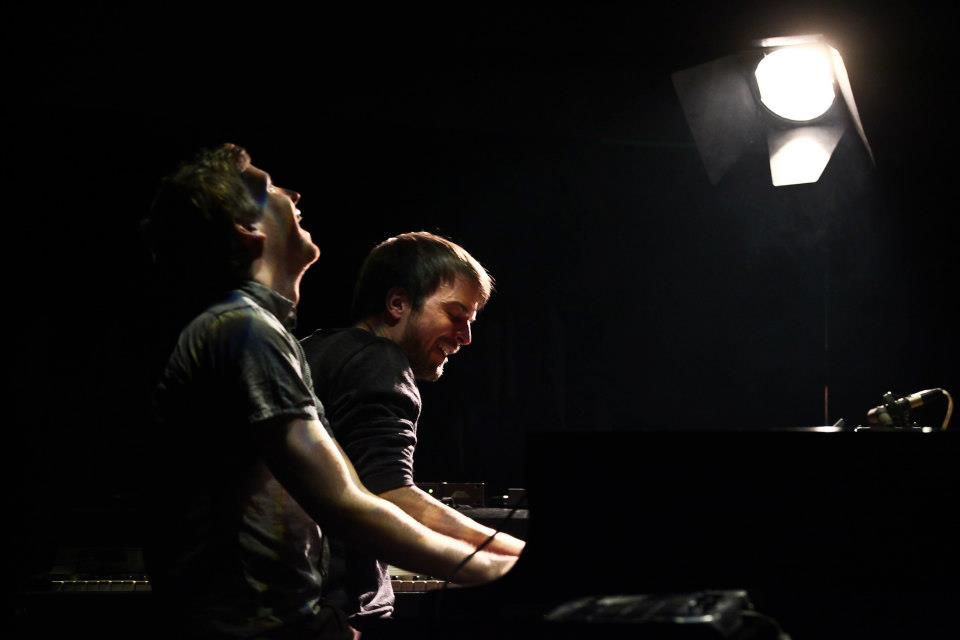
Nils, can you tell us a bit about your new album, Spaces? It felt like I had just sat down to watch you perform when I first listened to it.

Nils: The idea was that it feels like one performance in the end. I wanted to basically make it feel like I had one good performance over the 30+ shows we did.

So you were cherry-picking the best tracks from the tour?

Nils: Exactly, I was spoiled!

Did you have your album in mind when you started the tour?

Nils: No, no. I was just recording to see if it could end up being an album.  It was recorded over two years, so the first performance sounded much different to the last performance I recorded, and the last one I recorded was St Johns, so two tracks from that show made it on to the album. And yeah it changed over time. Some improvised bits, more worked out songs…

And how did your improvised pieces effect the overall recording?

Nils: The material developed on tour basically, it’s funny because I only have the setup you see when i’m on stage, I don’t have it at home so I can’t rehearse my live set-up, so every concert is a rehearsal in a way. Every sound-check is a chance to come up with new stuff.

How much do you two get to play together?

Nils: We’ve played around 30-40 shows together.
Ólafur: Yeah quite a lot! We met when Robert (Raths) asked if Nils could open up for me in 2010, he just joined our tour bus and after that we played a lot of shows.
Nils: Yeah, the Erased Tapes tour last year.
Ólafur: And of course in the studio as well.

Some of my favourite moments from you guys are of course, your improvisations (and there’s a few online) Are they planned AT ALL?

Nils: The one you’ve seen was probably not planned at all.
Ólafur: Yeah, initially they are not planned but then they tend to develop over time. There’s that one on youtube that’s quite popular, that one wasn’t planned at all. it was part of an improvisational tour I was doing and i’d always invite friends to join me on stage – it was the first time we had played together. And then after that, we’d often go back to that original idea, develop and build on it. So in the end they become planned but not consciously.


Is that how ‘Stare’ came together originally? 

Ólafur: Nooooo it was more like ‘hey I’m in Berlin, lets cook and have some whiskey! Then suddenly it’s 6am and we’ve done an album!’
Nils: Yeah that wasn’t planned. It just happened. When we were half-way through the material we got a little bit more ambitious and excited and decided to meet up again to make some more.

Nils you seem to enjoy remixes (for example the Screws project) but how did you decide on Max Cooper remixing Stare?

Nils: He basically just wrote us.
Ólafur: Yeah, he just did it! He sent us four remixes, he’s so enthusiastic, a big fan and he really wanted to do it. I love his music.
Nils: So nice of him.

Are you planning to see his show on Friday (at Decibel?)

Nils: We will definitely plan to meet, I’m not sure if i’ll have time to see his show though.

I’m interested in how much you feed off the audience. You mention it in your album and you say how much this influences you, but when I watch you live it’s almost as if you are in your own little world, head down..

Nils: Well in the middle of the album (Spaces) there’s this track called Hammers, and a cell-phone rings. I was improvising something and all of a sudden you here ‘ring-ring’ and I have to laugh, you know! It definitely changes your playing because everyone is laughing and giggling. So you can’t deny that you don’t create music for the people at a concert, it would be silly to assume that you only do it for yourself. I serve something to the people because they have paid to see it and I’m happy to deliver. And I value that – i’m happy that people come to the shows and I like to make them feel that they change the performance in some way.

If they’re really quiet, then I can play really quiet so they can hear everything. When the audience give a big applause excitedly at the end of the song, like a DJ, you remember ‘that track was good’, so they help me develop my material based on their response.

So how does this impact your playing style in the middle of a set?

Nils: If they are quiet, then you play more quiet, and if they are loud, then you play loud. So if you put it into perspective, the dynamic aspect of it changes. A piano can only go so loud, but a synthesiser can go really loud, open up the space, and it may make the piece after appear even quieter. It becomes a psychological thing.
Ólafur: I don’t think it’s about conscious decisions, it’s more about confidence. When I feel like the audience is enjoying what I’m doing, I’m more confident and experiment or try something new, but if the audience is a bit dry I might play it more on the safe side.

Do you have any pieces that you know will almost certainly get the audience on your side?

Nils: It’s important to structure your set list. You might have 12 songs and the order of these songs is what you may end up changing. When you know you have one track that people like the most you have to work out where to put it in the set.
Ólafur: I’ve changed in the middle of a set. I’ve just thought ‘well this one doesn’t fit here, I’m going to play this one instead’ even though I had a set-list. I expected the room to be different and prepared the wrong set list.
Nils: Like a DJ with the wrong records, you have to change it at the last minute and make it work.
Ólafur: [Laughs] It’s very bad for my string players when I do that, because I don’t normally announce my songs, I just start playing and you see them trying to find the correct sheet!

I think I remember seeing that! How much do you practice with your string players?

Ólafur: Not really at all. I mean they are professionals, I give them song sheets, I tell them to listen to the record, learn the songs, and then usually we just do a sound-check and a quick run-through.

Wow, so how do you choose your string-players?! Do you choose them?

Ólafur: Yeah I choose them.
Nils: I don’t have to choose them because i’m all alone…!

Ah but did you choose the toilet brush?

Ólafur: [laughs] How did you choose that one…?
Nils: I just didn’t have the money to buy proper drum-sticks.
Ólafur: Toilet brushes are probably more expensive.
Nils: They were two bucks from Ikea – two bucks for two.
Ólafur: Oh really. I bought one the other day for like $20,
Nils: I know, there’s a toilet brush for $500.
Ólafur: Yeah but you can change the ‘thing’ on it.
Nils: Oh realllly…
Ólafur: I just want to throw it away, but now i just have to go and buy another ‘thing’. You keep the stick, because it’s made of some fancy material. You can’t throw away the stick!
Nils: Sustainable…
Ólafur: Anyway, Viktor, who is my lead violinist and who I have worked with for a long time, we met in music school, and we just kind of wing it, between a regular group of around ten who we normally pick from.

Did you grow up with a lot of people you still play with now?

Ólafur: Yeah, to begin with most of my players were just friends from school.

And were you classically trained at this time?

Ólafur: Not really, I did one year in classical composition.

So are you mostly self-taught?

Ólafur: Mostly, yeah. I had education in percussion, but that was more like Jazz style, not really classical.

Ah, so can you play the drums as well then?

Ólafur: [laughs]
Nils: Well he is the better drummer. But piano is all about rhythm too.


[laughs] I have no co-ordination. When you’re playing two pianos up there on stage it blows my mind.

Nils: It works in our favour because we come from a background where we learn instruments. A lot of music these days doesn’t require people to learn instruments. They work with a laptop, they add things together and it might be really tasteful, really amazing, but people get used to the idea that there’s somebody on stage delivering what they pieced together in a studio. So when people today see musicians actually play an instrument it’s more of an experience.
Ólafur: I was recommending this band the other day and said ‘..and yet they are actually playing it’ [laughs] it’s amazing! When did this become a thing? They actually play the synthesizers! In just, five years this has suddenly become something weird. They don’t just press play on the laptop!

I think that’s a big reason why I really enjoy your shows, as my background is more electronic and I really respect what you guys do up there.

Nils: Yeah and that’s good [being from an electronic background]. It’s liberalisation of music. People who are 25 can still think ‘i can do it’ but it’s very different from learning music from an early age.

So what do you like to listen to at home?

Nils: There are no bad genres, there are just bad albums of a genre.
Ólafur: Jazz, classical, techno, rock. A big part of what I listen to is electronic music. Probably 30/40% of everything I guess.
Nils: I listen to a lot of jazz and old records. There’s always times for different material. Sometimes I’ll only listen to classical musical for a couple of weeks!

What are you looking forward to at Decibel this year?

Nils: Last year was really amazing. We had some bad technical issues in my performance but this year we are in a really great performance hall.

Anything different planned from last years Erased Tapes tour?

Nils: For me I’m still on the Spaces thing, so it’s similar to what you know from the record, and people over here don’t know it yet. This is the first time I’ll bring a synthesiser and the more electronic parts to American audience.
Ólafur: I’m bringing my vocalist which is pretty special, we’ll be playing stuff off the new album.


Talking of Arnor (Ólafur’s vocalist), were the vocal additions to ‘For Now I am Winter’ a conscious decision beforehand, as it was a different approach for you?

Ólafur: Yeah, it was more just a need to do something new. I was looking for something to do different on this album. I know the singer, he is a good friend of mine and we’ve always wanted to do something together. He is classically trained but has played in rock-bands his whole life – kind of the opposite to me, I’m pop trained but I’m doing more classical. I thought it’d be a great fit. We wrote the lines together but he wrote the lyrics.

Are you a perfectionist?

Ólafur: In a way. We’ve talked about this before. Perfection doesn’t have to be something with no mistakes.
Nils: It’s a perfect feeling about something.
Ólafur: You’re conscious about everything. We’re just very conscious about what we do.

Nils, that must’ve been a big step for you with ‘Spaces’, having to go through the hundreds of recordings and pick out the ones with no mistakes so to speak?

Nils: When I have one show, 90 minutes of material, there’s a small chance I’m going to perform it to my satisfaction. A lot of people would be really happy with the show and not notice the small things that really bother me, but I’m not happy with that, so I have to record thirty shows and take the best ones!

That’s probably the best way to do it, instead of being in the studio all day long.

Nils: Yeah it’s something you can capture on stage which you can’t in the studio. Like the PA system is loud, the synthesisers are loud, and we have room mic’s and the sub-bass is recorded on the mic’s – it sounds so different to when you just pluck the synthesizer on your computer. All these little things, plus the atmosphere, and the sweat – it’s a good experience!

And your well-esteemed labels. What do you look for and enjoy about Erased Tapes, and label manager Robert?

Ólafur: Apart from being a good person and all that obvious stuff, I look for someone who is just an enthusiastic fan of the music. I’m on a different label now, and I wouldn’t have gone there unless I could clearly see that they are huge fans and want to do what i do, instead of telling me what to do.

So you still see a role for the conventional record label? With so many artists doing it themselves nowadays?

Nils: I don’t like the whole concept [of not being on a label]. I see why people do it, and there’s a place for that too, but I think an artist should be concerned about making music, and the label concerned about promoting it. And then you share the money! There’s so many musicians, Facebook addicted, whatever, who spend five hours a day promoting music and only spend one hour playing the guitar. It should be the other way around. Play more instead of twittering!
Ólafur: But it’s great that it’s possible. Because It’s not possible for everyone to be on a label. I love those tools that we have and I’ve used them a lot, especially before working with Erased Tapes, I love the capabilities they have today. I can be in the UK and sell 500 records on the other side of the world.
Nils: I think it’s really nice that the fans can get closer to the artist. But sometimes I see the disadvantage. I get lots of random emails asking ‘hey Nils what headphones do you use?’ And there’s always a time and space to answer those questions. But on the other hand, it’s kind of nice to think that the artist is in a different sphere – makes it mysterious if you’re not totally accessible all the time. It depends…. I mean you can’t really write to Daft Punk and ask them what kind of headphones they would use? You wouldn’t get an answer!
Ólafur: And that’s kind of cool!
Me: They don’t have headphones, they have helmets!
Ólafur: They are built in! Custom made!

What’s the best place you’ve played in terms of setting and arena? When I was talking to Robert (Raths) earlier we were saying how great Hackney was but how surprisingly intimate it was for such a big place.

Ólafur: Oh yeah, that was a great place. But there’s two things to it. The room – atmosphere, closeness and feeling, and there’s also the technical aspect of the production. And very often those things are not found in the same place. Usually, technical places loses intimacy, and usually if it’s really intimate, it’s a small place that’s not very technical.
Nils: It really depends. The most exciting shows are the ones where you have a really bad feeling at soundcheck. You come into a room and think ‘this is going to be horrible’, and then there’s a good chance you’ll be surprised. Likewise if you think everything is perfect, then the performance might lose a bit of excitement because you expected it to be good. And then your mood, it depends if you’re tired.

Your audience are probably quite knowledgeable of what to expect from you guys right?

Nils: It’s funny, for me, people often think that we are, or maybe I am, just a classical ‘hat’ and people need to be respectful, and he’s a piano virtuoso and they have this image of a really serious guy who will try to bite you…
Ólafur: I think we both consciously try to break that. With my talking between songs, Nils drumming his piano.
Nils: Or me just wearing some ridiculous socks. [Laughter]
Ólafur: He’s wearing his happy socks.
Nils: No, these are not my happy socks, but for my style they are quite normal.
Ólafur: I like how you always wear happy socks on stage, and a hoody.
Nils: Not always!
Ólafur: I was thinking about starting to wear death-metal t-shirts on stage.
Me: I’ve been waiting for you to wear your bright yellow and black top we always see in your instagram photos.
Nils: We’ve just got to not wear a suit or be proper classical.
Ólafur: I don’t mean like a Slayer t-shirt… I’m talking about [Ólafur announces a load of bands I have no idea how to pronounce]
Nils: But they are kinda expensive huh?
Ólafur: Cult things
Nils: Like you buy them on ebay for $200
Ólafur: Is that too much? [laughs]
Nils: Ah whatever works!

That’s obviously your next venture…

Ólafur: I know what we do, we start a merchandising thing and we have our names, but in death-metal letters [laughs] with like these unreadable logos!
Nils: My new album, ‘Man Eater’ [laughs].

Don’t forget your socks.

Nils: I’ll get death-metal socks, whatever!
Ólafur: Death-metal happy socks!
–


Interview: Arovane: the return of the electronic architect

2013 has already been billed as the come-back year for electronic artists. Yes, Boards of Canada are back, but for those tuned-in to the early 00’s of electronica, you’ll also have noticed the absence of another one of the genre’s pioneers, Arovane.

Uwe Zahn’s releases date back to 1998, with the most notorious appearing on the infamous City Centre Offices label over ten years ago, home at the time to the likes of Ulrich Schnauss, Casino Versus Japan, Christian Kleine, Snd and Bitstream. Arovane’s distinctive melodic break-beat-laden electronica was the driving force of the genre for many years and his decision to stop making music in 2004 hit fans hard, with the last track on ‘Lillies’ becoming the swan song for Uwe’s signature sound.

Fast-forward nine years and Arovane is back. A couple of remixes for Ulrich Schnauss’ latest single ‘I Take Comfort In Your Ignorance’, a re-release of an EP and a brand-new album on n5MD called Ve Palor. I was lucky enough to ask Uwe a few questions on why he decided to say good bye and what he’s been up to all this time…

Welcome back Uwe!!! I’d like to start off by going back to the beginning. How and when did you begin producing music?

Thanks a lot! Everything started with some tape recorders, self constructed string instruments, microphones and a Casio keyboard. At around 15-16 years old, I was experimenting with sounds and tape manipulations. I placed microphones in rooms of a cellar to record specific reverbs and time shiftings. The Kraftwerk track ‘Autobahn‘ played on the radio at the time, and triggered my attention for synthesized sounds. I was blown away by that synthesized car sound with the doppler effect. I always felt like a scientist with a microscope, zooming into structures of sound. I used techniques of musique concrete, spliced tapes, played tapes backwards, manipulated the recorders and tapes technically to play loops.

A couple of years later I bought a Korg MS20 and a cheap analogue delay to record my first tracks. The next step was a digital synth with a superb, straightforward sequencer concept – the Ensoniq ESQ1. I never used a computer to sequence my tracks until the beginning of the year 2000. Currently i’m using a QY700 to ‘record’ my ideas, to play and to control my digital equipment. I run this hardware sequencer parallel to Ableton’s live 9.

How did your relationship with the legendary City Centre Office’s label begin?

Back in the mid’ 90’s I was listening to KISSFM radio in Berlin, consisting of many late night breakbeat shows. They encourage the listeners to send their music, so I sent some tracks on a DAT. A few days later i’ve got airplay and a call from Thaddi. He invited me to come to the studio for an interview. This started the ball rolling. I was looking for a label since 1991, after I moved from Munich to Berlin. Thaddi passed Sascha from Din records a tape with my tracks and the next step was the first EP, released in 1989.

Thaddi started his label (City Centre Offices) in 1999. He asked me to produce a 7″ vinyl to start the label, so we released Occer/Silicad. In 2000 CCO released Tides, which was a perfect counterpart to Atol Scrap, released on Din.


2003/2004 was obviously a big year for CCO (both a tough time and a great time for music). Ulrich’s rather good album, A Strangely Isolated Place was also released at the same time as ‘Lilies’. How was that period of time for you guys on the label?

Yes! it was a very busy period! Great music as well, like Ulrich’s album! There were a lot of remix requests and collaborations. I bought a Kyma system and built up my studio. Kazumi called me and I invited her to sing on my new production, Lilies. I got a lot of requests to play live, flew over to Japan to play live in Kyoto, Nagoya and Tokyo. There were concerts in France, Belgium, UK, USA… it was a fantastic period of time for me and for the music scene in Berlin.

Who else was inspiring you at around this time?

Hummm, I was listening to Bernard Parmegiani mainly, a lot of electroacoustic/ computer-acoustic music from around the world. But it was not only the music i’ve listened to at that time, it was a special, inspiring atmosphere, a network of creative people.

I’ve always wondered if you mean’t ‘Good bye forever’ with your last track on Lillies, or if it was a coincidence that you did indeed, say goodbye (for a very long time)?

How long is forever? Yes, I said ‘good bye’ for a long time and i’ve enjoyed that time to travel, meet people and to play music sometimes. The last track on Lilies sounds sentimental, but it was a new beginning for me in a way.


Was it an emotional good bye? And the big question, why?

It was a kind of ‘break’ in my life. I had a lot of (how do you say) ‘reversals'(?) in my life. That feeling, that you have to do something different? It wasn’t that emotional, it was a clear decision, but I love music, I love to produce music. This is my passion.

So what have you been up to for the past 9/10 years? Have you been producing, or did you just decide to pick up your tools and start again?

Well, I love to motorcycle. I traveled to the South of France on my motorbike. I ended up feeling drawn to that country and the people – it’s beautiful. Sometimes I played on my synthesizers back in Germany, but I wasn’t that inspired. I’d just program some sounds or listen to samples i’ve made. In 2012 I decided to produce new tracks. I’ve put out tonnes of DAT’s, listened back to them, and found Ve Palor, an album that was produced for Din. This, combined with freshly produced tracks sounded perfect for me, so I uploaded a track on Soundcloud and got some amazing feedback from the community.

And how did you end up going with n5MD to release Ve Palor?

Mike Cadoo (label owner) is wonderful. It’s a pleasure to work with him. He loves my music and I remember that first release on n5MD, theMD1. I told him about my idea to re-release the Cycliph EP and to release the album Ve Palor and everything worked out perfectly.

What can people expect from Ve Palor?

Classic Arovane music. It’s a kind of rewind back to the early 2000 years and a view to the future. I’m currently producing tracks for a new release in 2014 and I think you’ll be surprised by what’s in store with the new album.

Was it hard to get back into your classic style? Did you try anything different?

It wasn’t hard to get back into my style after that long period of time. I’m very into sound design, field recordings and manipulating sounds – dissecting sounds like a scientist with a microscope. I’ve finished a sample library for Zero-g with signature Arovane sounds. I’m in contact with lots of sound designers, and some very interesting and talented people to collaborate with on projects, as you’ll hear in some of the field recordings on Tides and Lilies. I’ll also be integrating this technique into my new productions. 


Does this have an influence on the obscure track titles in ‘Ve Palor’ and many of your other works?

A lot of people ask me that question. For me it is the easiest way to categorize my sounds, presets and tracks. I like to play with words. Sounds and tracks are unique and have their own characteristics. For example, some sounds, like ‘veed’ are soft, or ‘crk’, has a hard attack; bassy tracks like ‘boon’ or airy like ‘flirr’. I developed a unique system of nomenclature to categorize my sounds. It is more handy than numbers. 

Can you describe your studio set-up? Any favourite hardware? And what type of software do you use?

The ‘heart’ of my studio is the QY700 sequencer from Yamaha and my analogue Tascam mixing desk m2600. The Yamaha QY 700 is connected with my hardware synth’s and sampler. I’m using Waldorf synths like the Q and the microwave XT, Clavia Maschines like the Nordrack2 and the Nord modular G2, a Kawai k5000s, Access Indigo2 and TI2 synthesizers, EMU E4XT Ultra and e5000 Ultra sampler, outboard equipment like the TC Fireworx and the Alesis wedge. I’m recording in Ableton Live 9 and running a bunch of VST’s like Spectrumworx, Reaktor, Absynth, Aalto, GRM, Audio Spillage, MFM2, Zebra2, the machine from NI and the MPC Ren and studio.

n5MD are pressing your record to a lovely red vinyl edition. Are you a collector of vinyl?

A big yes! My favorites are a 7″ from CCO with Snd Loops and the Toytronic compilation – Neurokinetic on picture disk. Beautiful. (Gimmick – Wavefiles, below, taken from the compilation)


Are there any plans or wishes to play live soon? What would be your ideal live performance?

I would love to fly over to Japan again to perform. It was a very special experience for me, back in 2003. I will be playing live, 15th November 2013 in Dresden at Cynetart with Grischa Lichtenberger. I’m also planning a visual concept for my future concerts in collaboration with Akitoshi Mizutani.

Places are a big inspiration for this site, do they inspire you in any way?

Of course, places do inspire me. Tides and Lilies are good examples. ‘A secret’ is inspired by an old abandoned house I found near Caen. It was quite spooky to find old maps from 1918 and the horrible ghost of the first world war.

So if you were to produce a track based on a place, where would it be?

Hummmm, I don’t know. maybe a veeeery high tower to look over the world…

—

Arovane’s new album ‘Ve Palor’ is available to purchase now through n5MD in CD and Vinyl editions (with download). We’re also being treated to a very special isolatedmix from Uwe very soon.

Ve Palor tracklist

01. audiofragment
02. scrai-n
03. ve palor
04. scaabl
05. c ll lt
06. cleiy
07. ccale eqou
08. gniddt
09. leptr
10. deev
11. cae nij
12. foldt
gaed ventr (download bonus)
ioqu (download bonus)
vendt (download bonus)

Decibel X In Review

After years watching Decibel Festival unfold across the Atlantic from England, I was finally able to attend this year after my recent relocation to the Pacific North West. Five days later, as I sit on the Coast Starlight from Seattle back to Portland, I feel lucky to have experienced a very special tenth anniversary Decibel festival. Here’s my own personal low-down of the week, but I obviously didn’t get to see it all. So for anybody else who went feel free to comment below with your own experiences.

Wednesday: Venue pit-stops. No Order. Performances by Ben Klock & Kode9.

Arriving early evening on the Wednesday, the only performance I was interested in seeing was Peter Hook and The Light, where he was due to perform New Order’s classic ‘Power, Corruption and Lies’. We arrived at around 10.30pm and couldn’t get in as the venue (Neumos) was already at capacity – I expected it to be busy but it was a disappointing start to my festival experience. I later learnt that Moby went up and performed with him on stage, but after a chat with someone later on in the week, apparently any die-hard New Order or Joy Division fans were cringing the whole way through as Moby destroyed Ian Curtis’ unique and legendary vocals…

A quick walk down the road to ‘Q’ Nightclub and it felt like we had walked into a european super-club; with Funktion One speakers adorning each wall, a glitzy light show on the ceiling and Ben Klock getting down to his dirty business. We didn’t stay long, as the sound engineer that night was obviously intent on demonstrating the lowest spectrum of the Funktion One without any treble, and my trousers were rattling against my legs.

On to The Crocodile for a quick blast of Kode9 – it seemed like a good performance and the perfect venue, but we decided to call it a night as the best was undoubtedly yet to come.

Thursday. The kings of improv. Performances by Peter Broderick, Oliveray, Haushka, Moby.

Thursday got off to a great start as my planned interview with Nils Frahm was moved to 1pm. A skip over to the W Hotel to meet the Erased Tapes crew including Peter, Hauschka, Olafur, Nils and label owner Robert, and my excitement for the Optical Showcases that were to begin that night had reached new heights. (More on my interview with Nils and Ólafur to come very soon!)

The Optical Showcase kicked off in the Nordstrom Performance Hall and I was quick to bag a front-row seat. Peter Broderick introduced himself via his choice of outfit – a suit “chosen by a gay friend in Portland” he said. His modest and charming demeanour won the crowd over straight away and his equally brilliant voice was quick to draw gasps from the audience. Switching from the banjo, to acapella and violin, Peter’s warmth and charm shone through as he played new material “he was trying out”. I’m not sure if everything he played that night will make his new album though – his unexpected improvised rapping was the perfect end to his set and the ideal crowd-warmer for Oliveray.

Nils Frahm then joined Peter on stage and as expected took to the piano to accompany Peter’s vocals. What followed, was again more unexpected improvisation as these two musical genius’ decided to tap, drum and loop their way across the stage, intersecting delicate Oliveray tracks with surprise, laughter and smiles from the crowd. Nils was already a magician in my books, but I think he found another partner-in-crime that night.


Hauschka, the legendary king of improvised piano began with an introduction to his work schedule, apparently consisting of many haunting film-scores, he warned the audience he had been in a dark place recently. With a Grand Piano full of unknown gadgets and tidbits, and a full screen linked to a camera peeking inside the hood, Hauschka pelted out a 45 minute, non-stop piece that went from skittering tight notes to blasts of bass and rolling melodies. Mind-blowing and all-consuming, Hauschka took advantage of coins, tins, drumsticks and what I think were a couple of vibrators pinned down with tape (!) to conjure up scores of euphoria, dictating his very own improvised movie soundtrack. Despite his unorthodox approach, he said he “likes the purity” of the piano, and like a musical cleansing process, proceeded to remove the trinkets that adorned the piano, throwing them on the floor for all to see just how much experimentation and ingenuity went into his performance. An amazing first night of Optical performances.


From here, we headed over to Showbox Sodo, mainly because it was right next to where we were staying so we could see the night through in comfort. Also, after our first night’s experience trying to get into Neumos we didn’t want to risk turning up late to see Teen Daze (who I heard had a stormer), but on hindsight we could’ve made a better choice. Whilst Moby’s warm-up act were terrible, The Little Idiot did a good job banging out some dirty techno which at times was just perfect, but some atrocious mixing moments and the weirdest crowd i’ve ever been dancing with, put a quick end to the night. More for the energy bank though and the highly anticipated Friday schedule.

Friday. D-day. Decibel Conferences and Performances by Nils Frahm, Olafur Arnalds, Dauwd, Beacon, Lusine, Shigeto, Max Cooper.

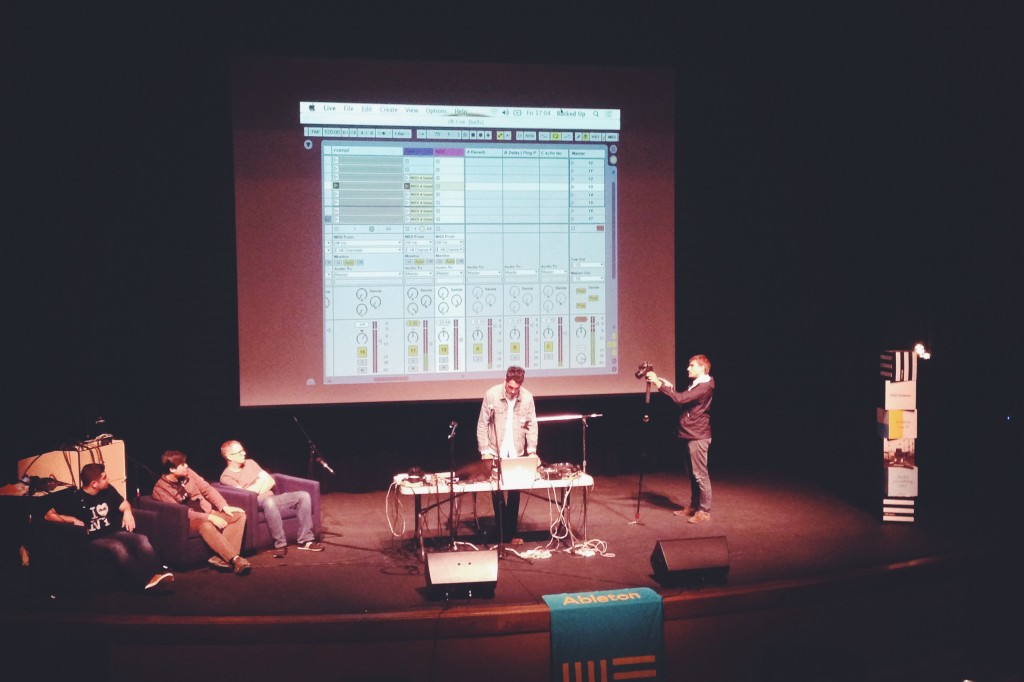
The big day. My Decibel day of choice, started with a visit to the Broadway Performance Hall to get a download on sound-related topics, which are for the most part over my head. An intimate session with Olafur as he took a crowd of twenty through his Ableton setup, his loops and his very earnest approach to production – a sneak peak into what was to come that evening. This was followed with a lecture by Rafael Anton Irisarri who took a room through his surround-sound manipulation techniques. Then, a quick glimpse into Ghostly’s Dauwd and Lusine’s setup before I made a dash back to the Performance Hall to make sure I was in line for the Erased Tapes special showcase with Nils and Olafur.


Seats taken, and the space filled 20-minutes before the first note was played. Nils and Olafur have become infamous for their performance on this tour and this was destined to be one of the highlights. Nils didn’t waste any time in taking to the piano and beginning his ‘Spaces’ performance with Olafur joining him shortly at the start with a glass of wine (or juice as Nils may have it). My review of ‘Spaces’ pretty much sums up how fantastic it was should you want an overview of the entire performance, however in a twist of fate relating to his album inspiration, a raggae sounding ring-tone interrupted Nils’ flow in the middle of his switch into ‘Hammers’, only for Nils to stop, give a smile to the crowd (as if to thank them for the inspiration of his latest album) and switch from the Rhodes straight back into his emotional flow. This moment happened at almost exactly the same time as it does in his new album ‘Spaces’…

Nils quoted on ‘Spaces’ that the audience are his main inspiration for how a performance will grow and develop, and during “Over There it’s Raining”, the silence felt from the room was almost unreal – it seemed to inspire Nils to approach this particular track even more softly than normal. Some of the most, quiet, delicate and intricate piano playing I’ve ever witnessed, balanced with his multi-piano manipulations.

Nils stood up to end the set with the synth-laden “Says” and powered his way through to a well-deserved crowd joining him with a standing ovation. I experienced his genuine gentleness and humour when i interviewed him the day before, but watching him perform is like witnessing a dark-magician alter-ego conjuring up a musical storm – a genius, mystical, out-of-this-world experience.

Ólafur started with his audience-sample loop, similar to my experience at Hackney Empire last November and continued with tracks from ‘For Now I am Winter’, delivered as always, in spectacular fashion alongside plenty of audience banter. Every girl in the room was swooning at his Icelandic charm and modest jokes. Whilst Ólafur is an easy focus of attention, he gave plenty of room for his violinist to shine, who delivered a ridiculous solo. And the unselfishness continued as Ólafur invited ‘For Now I am Winter’ vocalist, Arnor Dan to the stage to deliver the album’s title track – an amazing voice which really shone on the big stage. As Arnor walked off to leave Ólafur to finsih, he gave a little punch to the air as if to congratulate himself on how well it went.

Like every single Optical performance at Decibel so far, Ólafur was greeted with a standing ovation from the crowd and once again, these musical geniuses had won the hearts of every single person in the room.

The night wasn’t even finished and I was rushing over to The Crocodile for another highly-anticipated showcase by Ghostly International. Label newcomer Dauwd began the night amongst a fire-alarm evacuation and finished on spectacular form with his melodic, layered driving electronica. This is only his second tour with Ghostly and he already looks a part of the Ghostly furniture.

Beacon followed and sent the room into a hazy, dreamy state as eager eyes fixed on the duos silhouettes and angelic vocals. Lusine was quick to follow and like a forgotten godfather of electronic music, laid down the dance-floor friendly electronica law – simple, clean and just damn good, people can’t help but smile and enjoy Jeff’s productions, especially as he debuted some brilliant new material.

Two-years ago, Shigeto was warming up for his label-mates, but now takes centre stage after his recent album has caused a stir. Adorning Portland-esque trendy lightbulbs amongst his synths and drum kit, Shigeto wasted no time in sending an expected Ghostly crowd into a hip-chopped electronic frenzy. Amongst thanks to Decibel and gratuities to the other performing artists, Shigeto, as always, gave it 110% and is now a well-deserved head-liner.

One last performance of the night and I was off to catch Max Cooper at Q. Despite the millions of remixes, live sets and DJ recordings i’ve heard from Max this was to be my first time catching him live. Walking in, and you could immediately sense a different vibe from the first night’s experience at Q – the sound was much better, the crowd were already in full flow and Max was dropping his signature sound from one-track to the next. He even paid homage to the earlier Olafur performance with a subtle little remix from (what I can remember) ‘For Now I Am Winter’ – maybe an unreleased gem we can look forward to?

Saturday. The original heroes. Performances by Juan Atkins, The Orb, John Tejada, Matias Aguayo, Thomas Fehlmann.

There was only really one act I wanted to see on the Saturday – The Orb. Everything else took a back-seat, however it ended up being one of, if not my favourite nights.

I chose to skip the Zola Jesus Optical show at The Triple Door, which going by everyone else’s feedback was a mistake – an acoustic set backed by an orchestra apparently. However, my absence meant I got to the Showbox venue early enough to grab a table and wait for The Orb to appear.

I forgot that Juan Atkins was also on the bill and as soon as he stepped up with his choppy mixing and energetic detroit techno, I was gravitating towards the dance floor. Not a moment too soon and the legendary Alex Paterson and Thomas Fehlmann graced the stage to a rapturous applause.

What followed may not have been an original performance – it was raw, it was familiar, it was swampy, it had Alex Paterson smiling from ear-to-ear and Fehlmann rocking like a possessed doctor, but it was The Orb and it was great. Edits of ‘Little Fluffy Clouds’ amongst other classic cuts, a quick glean at the crowd and every single person, including The Orb were witnessing a rather special reunion set. Apart from the Optical Showcases, this was the only crowd I witnessed at Decibel who seemed 100% obsessed and locked into who they were watching. It was great to see middle-aged balding men (no comment – I’m one of them) and psychedelically dressed hippies grinning and nodding to their heroes from years gone by.


Any tiredness I had collected until that point was replaced with adrenalin and we quickly stomped over to the Kompakt after-hours at Neumos. Thomas Fehlmann was due to perform a live set, but at 5am this seemed a little unrealistic to stick out. However, I have to thank John Tejada and Matias Aguayo for keeping me rocking until the time came. Tejada, with an emphatic minimal techno set that would lead me to buying every single record played if I had a way of finding out, and Aguayo with a unique vocal-looping-latin-inspired performance that kept the energy rolling. Listen to Tejada’s set here.

Fehlmann arrived on cue at 5am and with a half-empty club, proceeded to rip the place apart with edits of his own productions on the likes of ‘Gute Luft’. Again, Fehlmann gently rocking as he stared into his laptop, only to break out into subtle little arm-dances and cheeky smiles as he realised his beloved following had stayed with him until the very end. Listen to Thomas Fehlmann’s set here.

Sunday. A grand-bient finale. Performances by Raime, The Sight Below, Nosaj Thing.

I was tired by now, but there was one last Optical Showcase and it was set to be a stunner. Arriving early at the infamous Triple Door (it was my first time and is quite a legendary place after hearing many ambient live sets recorded here), I had a brief chat with HC (Headphone Commute) and waited out an unexpected delay to the show as Decibel tried to compensate for Oren Ambarchi’s delayed flight.

My venue inexperience showed as the seats we were given placed us at right-angles with the stage – great for a band, not so good for any AV performance. Raime were up first and the english duo wasted no time in delivering a harrowing soundtrack, whilst hunched over their laptops in the stage’s dark corner. You could tell these two hail from a dubstep background with their subtle appreciation of beats, but the progressive bells and washes were from the (twisted and brilliant) mind of a couple of ambient masters.

After a brief break and a well-deserved Decibel thank-you procession, The Sight Below took centre stage, laden with his laptop, numerous loop pedals and his infamous hoodie. I was lucky to see Rafael perform as himself at Substrata a few months back but i’ve never seen him perform as The Sight Below – the guise which induced my entry into Rafael’s productions. His performance can be summed up pretty simply – #dronelife. Rafael shook The Triple Door to the ground, teetering on the edge of the maximum output, as subtle guitar loops grew into an atmospheric monster. My friend had to leave as he said he was getting heart palpitations – no joke – I wasn’t surprised. This gentle dinner setting was being assaulted by a wonderful, rich ambient performance from Seattle’s finest. The subtle introduction of vocals into the last enveloping track blew my mind, and pretty much everything else in sight.

Oren Ambarchi was due to cap the night but couldn’t make it due to a delayed flight, so Nosaj Thing was lined up at last minute to close proceedings with a debut ambient AV set. I enjoyed it. It was unique and melodic as you’d expect from him, similar to the likes of Sun Glitters and Teen Daze, but I couldn’t help but think Oren’s set would’ve capped this night off perfectly. After The Sight Below, I wanted something dark, dramatic and transcending.  But, i’ve been spoilt and had got used to such perfect programming. Decibel did an amazing job getting Nosaj in at last minute and it was a testament to the hard work put into this festival. For a great in-depth review of the Optical 4 night, have a read of Kexp.

From the showcases, to the set-orders, it was an unbelievable week of music and without a doubt the best ‘city’ festivals I’ve been to. It’s not often you get to see the faces of the grafters, nor is it often you see a festival curator such as Sean Horton at nearly every single performance you go to, running around making things happen. Top this off with a dream lineup and it’s one hell of a festival. I missed out on so much; Machinedrum, Aeroplane, Lorn, Âme, Teen Daze, Lapalux, Cajmere, Gold Panda, Zola Jesus to name just a few sacrifices, but I wouldn’t have had it any other way. Thank you Decibel for a mind-blowing musical week, and here’s to another ten.

Top 5 festival moments (a list of complete performances was too hard)

1. Alex Paterson and Thomas Fehlmann glancing at each other on stage with total satisfaction and happiness (because I was in it with them!)Main picture.
2. The Sight Below rattling the hell out of The Triple Door. Is it still standing?
3. Peter Broderick freestyle rapping at the end of his performance.
4. Singer, Arnor Dan joining Olafur Arnalds on stage – what a voice.
5. Nils Frahm’s emphatic standing ovation at the Optical Showcase. Grins from ear-to-ear.

Five tips for next year:

1. Get to the venue early if there’s something you really want to see.
2. Avoid the pasta at Lost Lake Cafe opposite Neumos.
3. Try not to get a seat down the side of the Triple Door at any AV led performance.
4. Avoid the Neumos / Q area after 2pm. It’s a war-zone.
5. Don’t take a mate with a dodgy heart to see The Sight Below.